
Do You Really Need a Full-Time MBA? A Frank Take.
|
|
Yogveer Singh Chhikara
|
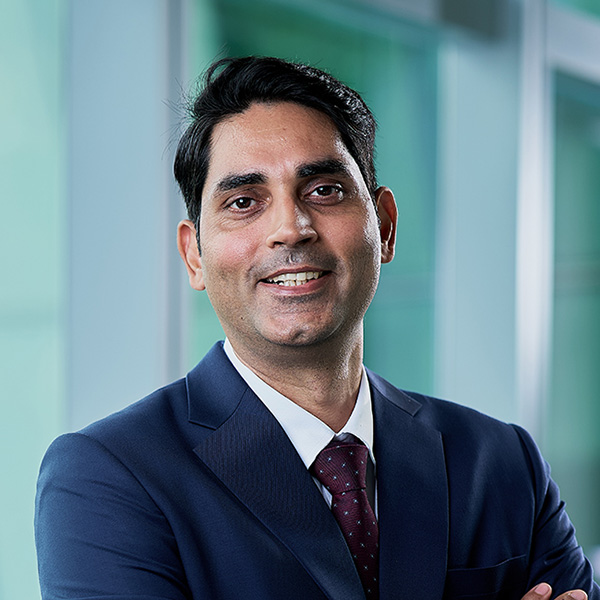
Before I tell you my story, let me be blunt.
Do you really need to quit your job, forgo two years of income, and take on massive debt for a full-time MBA when a part-time program can give you the same rigor, the same professors, the same classmates (yes, you study alongside full-timers), the same network, and the same degree—without the crippling opportunity cost?
I’m not here to sell you a dream or paint an unrealistically rosy picture. This is my frank take on the NUS Business School part-time MBA program—the brutal schedule, the real sacrifices, the genuine transformations, and whether it’s actually worth it. That’s the question I wrestled with. And spoiler alert: I found my answer, but it wasn’t easy getting there.
Why I Took the Leap
I moved to Singapore in 2011 with my wife and 1.5-year-old son to work with a deep tech client of TCS. Life quickly found its rhythm—learning new telco technologies, traveling to countries I’d never imagined visiting, managing accounts, leading teams. I had great colleagues, stable work, a predictable life. What more could I ask for?
Yet somewhere in the back of my mind, that old aspiration of doing a Masters in Business kept whispering. Some colleagues talked about MBA programs; a few actually went for it. I mostly just… talked. When you’re comfortable, it’s easy to postpone dreams.
Then COVID hit in 2020.
Working from home gave me time I didn’t know I needed—time to reflect, to question, to be honest with myself. I realized I’d spent years becoming an expert in a narrow slice of telco, but I knew embarrassingly little about how businesses actually work. How do CXOs make decisions? What drives strategy at the top? In a company with 600K+ employees, I felt like a small cog in a massive machine, and that feeling bothered me more than I wanted to admit.
The thought became urgent: Now or never.
I started exploring business schools, but the numbers were daunting. With 17 years of work experience and a family depending on me, the opportunity cost of most programs was simply too high.
That’s when NUS Business School stood out. The global reputation was undeniable, but what sealed it was the flexibility—blended classes with full-timers, access to the same professors, student leadership opportunities, and the entire NUS alumni network. I could support my family and invest in my education. No compromises on either front.
I made myself a promise: if I was doing this, I’d do it fully. Learn genuinely. Make real friends outside my industry bubble. Push myself into areas I’d never worked in before. Get uncomfortable again.
So I applied. And I got in.
Juggling Act: Making It Work
Let me be honest—the grind was brutal.
I lived in the northeast of Singapore, worked in the east, and classes were all the way in the west. That’s roughly 3 hours of daily commute, and at peak times, I was making this journey five days a week. I’d decided to finish the program on the same timeline as the full-timers, which meant no half measures.
My days blurred into a relentless rhythm: wake up at 7 AM, leave for work by 8:00 AM, from office, rush to class by 5:30 PM. Classes started at 6:30 PM and finished at 9:30 PM. I’d get back home by 10:30 PM. Then came the real work—assignments, presentations, group projects. Midnight oil became my constant companion. The next morning, the cycle would start all over again.
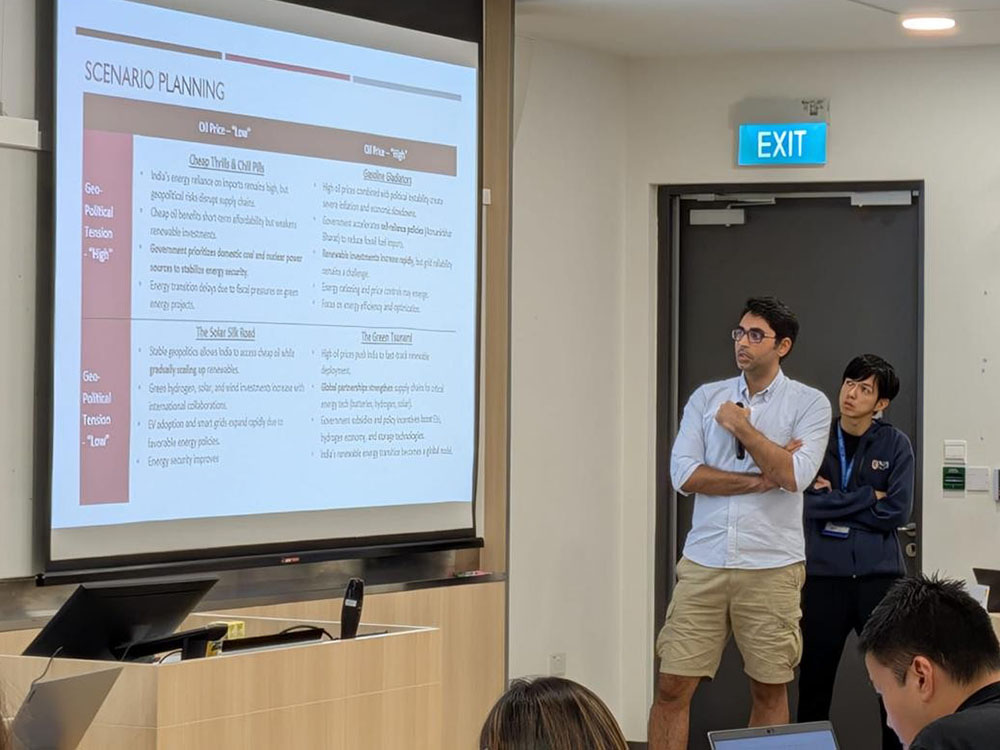
Delivering the Global Strategic Management Final Presentation
Weekends? Those disappeared into networking events and assignment deadlines.
And Then I Decided to Make It Harder
Because apparently, I thought I had too much free time, I took on the role of Vice President of the Sustainability, Ethics and Impact Club in the student council.
Now I wasn’t just managing office, coursework and commutes—I was organizing events, coordinating with sustainability experts, bringing thought leaders to campus to engage with our cohort. Every event meant additional planning, outreach, logistics. Every speaker meant emails, follow-ups, and late-night prep calls. I was constantly on my toes, meeting new people, exchanging ideas, trying to create meaningful experiences for my batchmates.
Looking back, I’m not sure if it was ambition or madness. Probably both.
It’s easier said than done, but once you’re in the thick of it, there’s only one way—through. You just have to make it work.
For the first time in my life, I became obsessive about my calendar. Every single slot was blocked—meetings, study sessions, club events, even meals. From morning to night, everything was strategically planned. Time wasn’t just scarce; it was my most valuable currency which I couldn’t afford to waste.
I couldn’t have done it alone. My family—who gave me the space I needed. My Boss and Client manager, who understood what I was trying to build and supported me through it. Friends who didn’t take it personally when I went radio silent for weeks.
They say it takes a village to raise a child. Turns out, it takes one to get through an MBA too.
You don’t find balance during an MBA. You find rhythm. And you hold on tight.
Inside the Classroom: More Than Just Concepts
The coursework hit me like a wave—Financial Management, Financial Accounting, ratio analysis, number crunching. For someone who’d spent nearly two decades in telco technology, this was entirely new terrain. I was learning a different language.
But then came modules like Corporate Strategy and M&A, and suddenly, the fog lifted. I began understanding how corporates actually think, how decisions get made at the top, how mergers reshape industries. These weren’t just theoretical frameworks—they were the answers to questions I’d been asking myself for years.
What made it truly powerful wasn’t just the content—it was the people in the room.
Our cohort was a living case study in diversity. Full-timers sitting next to part-timers. PhDs, CFAs, CAs, and doctors. Classmates from medicine, aerospace, finance, tech, manufacturing—you name it. Ages ranged from 24 to 48. Different countries, different industries, different life stages.
Every assignment became a lesson in perspective. The same business problem would get five completely different approaches depending on who was in your group. The CA would dissect the numbers. The doctor would think about stakeholder impact. The aerospace engineer would map out systems and processes. And me? I’d bring the tech lens.
That’s where the real learning happened—not just in the lectures, but in those heated group discussions at 11 PM over MS Teams, in the debates that stretched past class time, in the moments when someone challenged an assumption I didn’t even know I was making.
Professors were approachable, always willing to dig deeper if you showed genuine curiosity. But honestly? Sometimes my classmates taught me more than the textbooks ever could.
If business school teaches you anything, it’s this: the smartest person in the room is the room itself.
Beyond the Books: The Real MBA Experience
The real MBA didn’t happen in the classroom—it happened after class. Those post-class dinners where assignment discussions turned into life conversations. The late-night coffee runs when someone was struggling with a concept and the group rallied to help. That’s where acquaintances became friends, and friends became family.
Stepping Outside My Comfort Zone
Being Vice President of the Sustainability, Ethics and Impact Club pushed me in ways I didn’t expect. Suddenly, I was reaching out to industry leaders and sustainability experts with a confidence I didn’t know I had. Bringing speakers to campus, organizing events, watching my batchmates’ eyes light up during those sessions—it felt like I was creating something meaningful beyond just my own learning.
Bringing India to My Classmates
One of the most rewarding experiences was organizing the India Global Immersion Program. Working for the Tata Group gave me a unique opportunity—I could give my international classmates a real look at Indian corporates, not just through textbooks but up close.
I arranged company visits to Tata Group of companies for the India Global Immersion Program (GIP) team. For many of my batchmates, this was their first time seeing how Indian businesses operate at scale, understanding the complexity of managing diverse markets, navigating cultural nuances while driving global ambitions. But it wasn’t just about boardrooms and business strategies—I wanted
them to experience India at the cultural level too, to see the context that shapes how we do business.
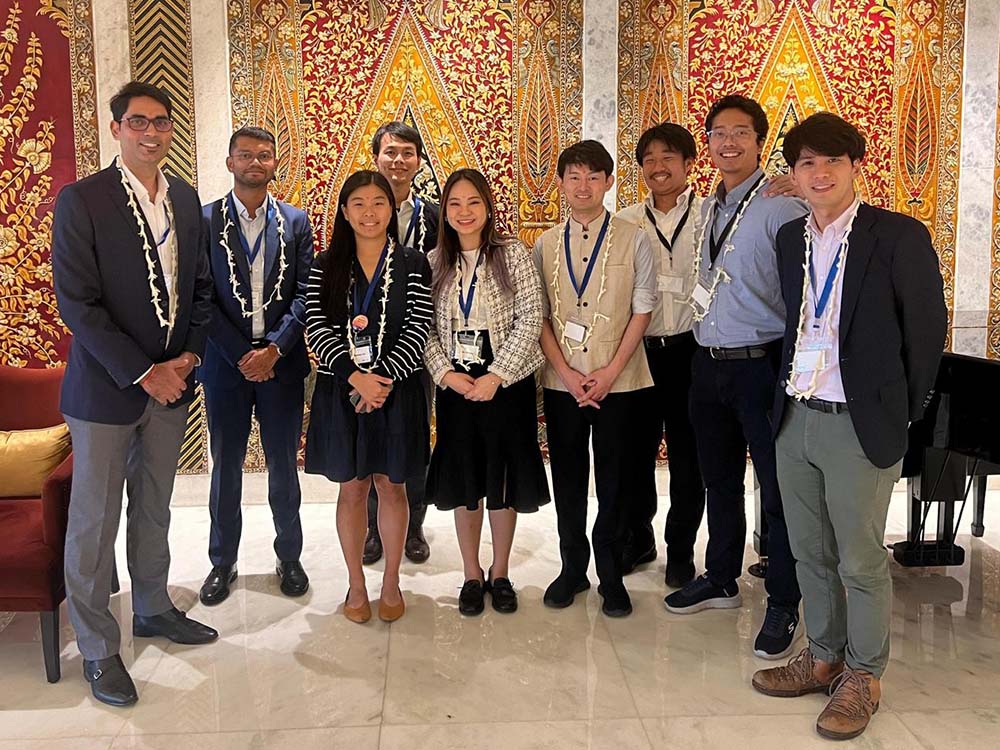
Visiting the IHCL (Taj Group of Hotels) as part of the India GIP
Watching my classmates ask questions, make connections, and genuinely engage with the Indian corporate landscape was incredibly fulfilling. I wasn’t just learning anymore—I was teaching, sharing, building bridges.
Diving Into the Unknown
The experiential programs were designed to throw you into the deep end, and they delivered. That’s exactly how I landed my MBA Consulting Project at KPMG, working on the “Decarbonization of the Steel Industry in Indonesia”.
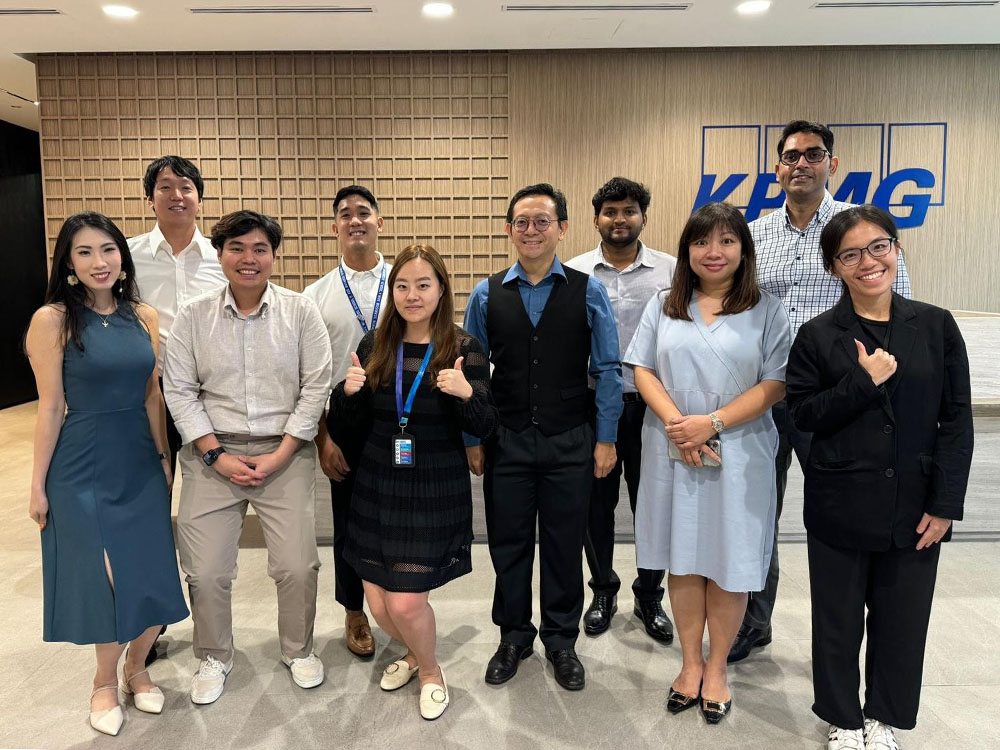
Wrapping up the MBA Consulting Project
Let me be clear: I knew nothing. Not about Decarbonization. Not about the Steel Industry. Not about Indonesia’s industrial landscape. I was completely out of my depth.
But that was the point.
My team and I had to figure it out together—researching, learning, unlearning assumptions, asking dumb questions until they became smart ones. We sailed through it, not because any of us were experts, but because we learned to leverage each other’s strengths. It was humbling and exhilarating in equal measure.
Then there was the C-Suite Module—a masterclass in executive communication. They didn’t just teach us how CXOs think; they put us in their shoes. Simulations where you had to make decisions with incomplete information, defend your strategy under pressure, communicate with clarity when everything felt uncertain. It gave me a taste of what leadership at that level actually demands.
These experiences didn’t just add lines to my resume—they rewired how I think, how I communicate, how I show up.
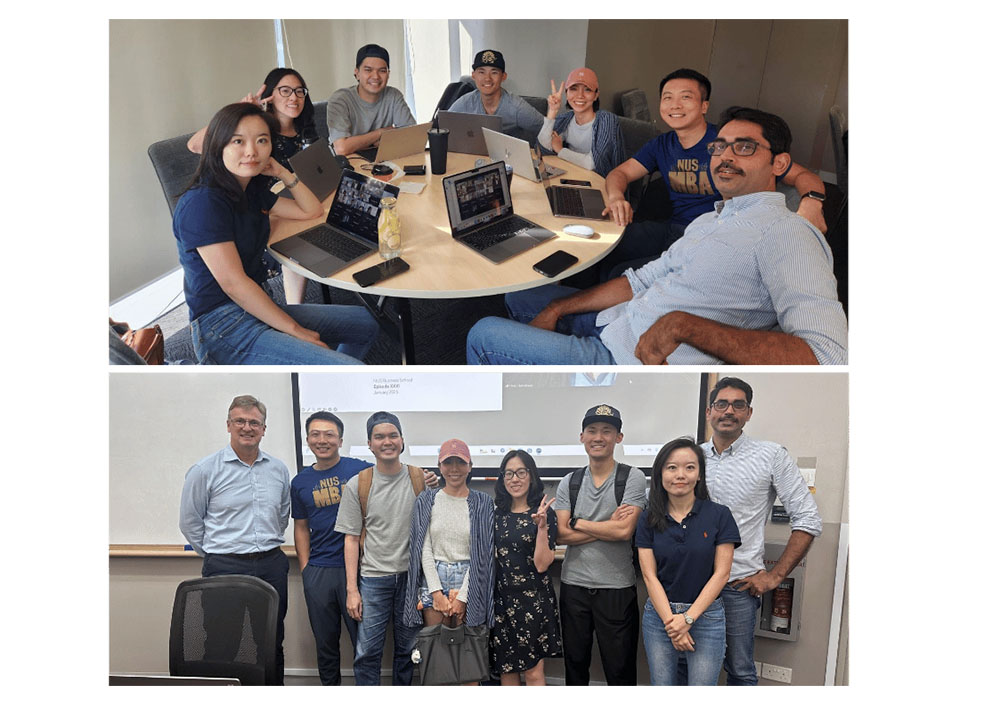
C-Suite Insights: Group discussion session and presentation
The Transformation: What Changed
Looking back, I barely recognize the person who started this journey.
I can now sit in a business meeting and actually understand the financial implications behind every decision. I see how strategy gets created in boardrooms and why execution often looks nothing like the plan. I understand what it takes to launch a new business—the risks, the trade-offs, the unglamorous grind behind the glossy pitch decks.
I’ve learned how VCs think, the due diligence that keeps them up at night, why they say no to 99 ideas before saying yes to one. I can build sustainability strategies that aren’t just feel-good corporate jargon but actually tie to business outcomes.
The list of skills and frameworks is long. But here’s what really changed: How I think.
Before the MBA, I had one lens—technology, telco, execution. Now I have multiple. I can zoom out to see the big picture, then zoom back in to dissect the details. I know when to think inside the box (because sometimes the box exists for good reason) and when to break it entirely. I’ve learned to ask better questions: Why are we doing this? Who benefits? What’s the second-order effect? What are we not seeing?
I’m no longer just a cog in the machine. I understand how the machine works, why it’s built the way it is, and more importantly—how to rebuild it when it’s broken.
The technical skills matter. The frameworks are useful. But the real transformation? It’s in how I see problems, how I approach solutions, and how I show up in rooms where decisions get made.
I’m not just participating anymore. I’m contributing. And I can feel the difference.
Closing: Was It Worth It?
Without hesitation—yes.
The sacrifices were real. The late nights, the missed family moments, the relentless grind—they all happened. But so did the gains, and they far outweigh what I gave up.
If someone asks me whether they should consider the NUS part-time MBA, my answer is always the same: Go for it.
The program is brilliantly designed with flexibility at its core. You can graduate alongside full-timers in 22 months if you’re ambitious, or stretch it to five if life demands it. It adapts to you, not the other way around. In today’s VUCA world, for someone with experience who wants the rigor of a top-tier MBA without the crippling opportunity cost, this is the best option out there. You get the full-time MBA experience without having to pause your career or your income.
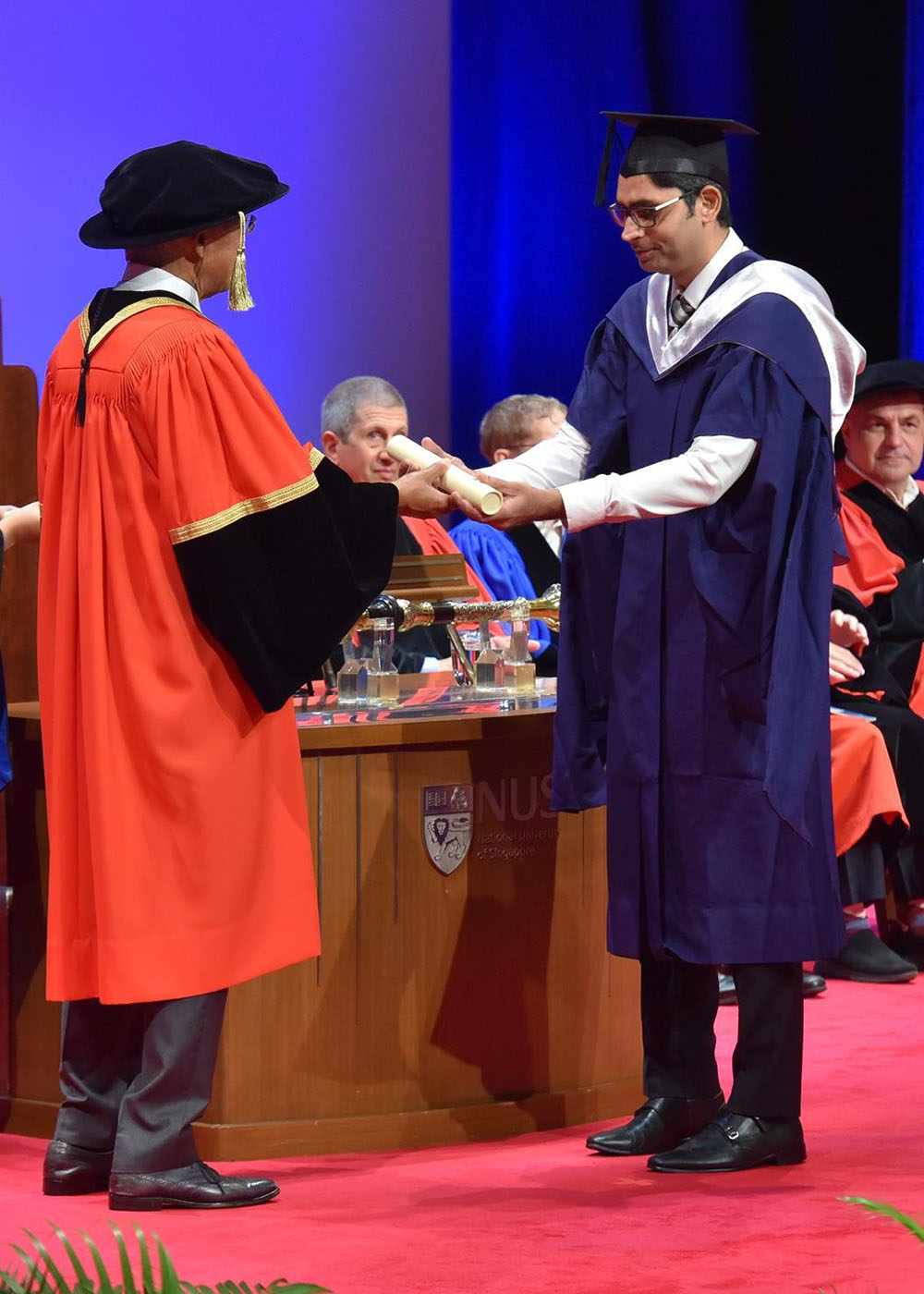
Graduation Day: A Milestone Achieved
Today, I work as Sales Director at TCS, handling a regional role—something I couldn’t have imagined before the MBA. The alumni network has been a gamechanger. I feel more approachable, more connected across the region. Doors open differently now. Conversations happen at a different level.
Looking ahead, I see a growth path that excites me. The MBA didn’t just give me credentials—it gave me clarity, confidence, and a community I’ll carry forward for the rest of my career.
It was the right decision. And I’m just getting started.