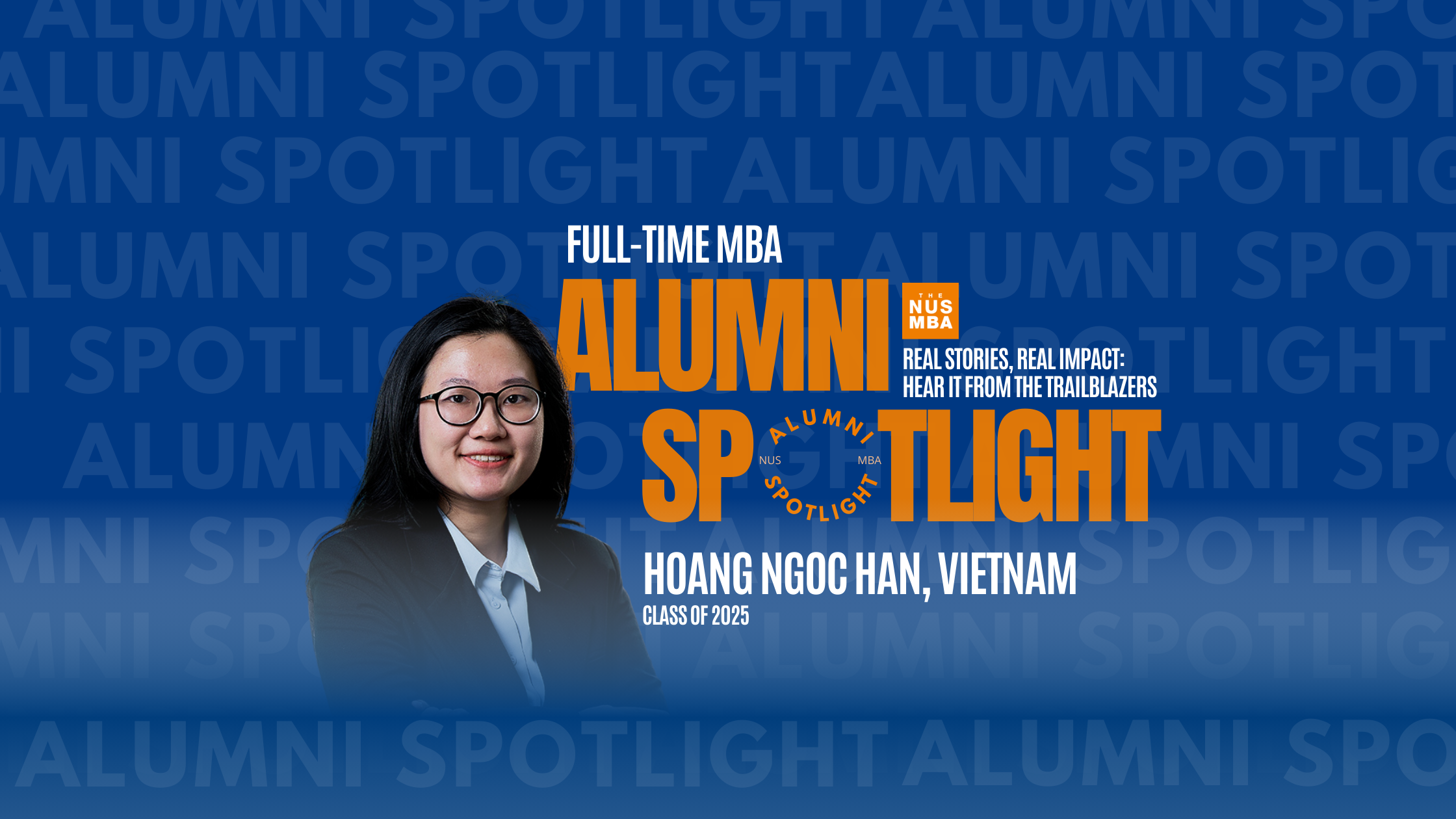
Finding Clarity, Confidence, and Career Growth through the NUS MBA
|
|
Hoang Ngoc Han
|
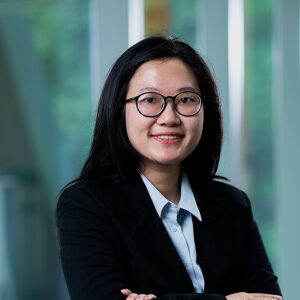
“The MBA didn’t just accelerate my career — it realigned it,” Hoang Ngoc Han reflects. “Before NUS, I thought growth meant taking on more scope or moving up quickly. But the MBA gave me the space to pause and rethink what I actually wanted in the long term. That shift in mindset helped me pivot from execution-heavy roles in e-commerce into a more strategic position in a completely new industry.”
Having worked across merchant acquisition, partnerships, brand incubation, and category management, Han began to see herself as a T-shaped professional — someone with deep expertise in one area but the curiosity to explore beyond it. “While many thrive in a single vertical, I’ve always been eager to zoom out, explore different functions, and build a more holistic view of business,” she shares. “The NUS MBA offered the perfect reset: a chance to reflect, reframe, and reposition myself toward a more strategic path.”
Han reflects on her early career at Shopee, humorously noting that three years in e-commerce felt like a decade in a traditional corporate setting. She describes the environment as a steep, high-speed learning curve that eventually led her to a plateau. At that point, she sought broader opportunities to make larger strategic decisions and to avoid being confined to business development roles indefinitely.

Han taking part in AB InBev’s Global Beer Responsible Day — promoting moderation and responsibility.
That reset had a profound impact. Today, as BU SEA Strategy Assistant Manager at AB InBev, Han applies the structured thinking and cross-functional collaboration skills she honed during the MBA. “I learned how to break down ambiguous problems, apply structured thinking, and align cross-functional and cross-cultural stakeholders — all of which I now use in my role at AB InBev.”
One defining moment came even before she started the job. “During my interview with AB InBev, the final question from my now-manager was, ‘How many TVs are sold annually in Vietnam?’ which is a classic market sizing prompt,” she recalls. “As I calmly picked up the marker and walked through the step-by-step calculation on the whiteboard, I realised how much I had changed. Pre-MBA me would’ve hesitated or overthought it. But this time, I approached it with structure and confidence. The MBA has rewired how I think, solve, and communicate under pressure.”
Seeing Strategy Through Southeast Asian Lenses
Han describes her time at NUS as a masterclass in both business and cultural intelligence. “One of the most valuable and transformative parts of the NUS MBA was learning alongside classmates from 20+ nationalities and vastly different industries,” she says. “Coming from a primarily Vietnamese and e-commerce environment, I was used to thinking fast and executing hard. But the MBA pushed me to slow down, listen more, and understand how different backgrounds shape the way people view strategy.”
This lesson became particularly relevant when analysing Southeast Asia (SEA), a region she thought she knew well. “I quickly realised how different consumer behaviour, channel dynamics, and regulatory frameworks are across countries,” she explains. “What works in Vietnam might not work in Indonesia, and what matters to a Thai consumer could be irrelevant in the Philippines.”

Han visiting Modern Trade and Traditional Trade outlets — reinforcing her belief that strategy and execution must go hand in hand.
Through countless case discussions and group projects, Han learned to think in context, not assumptions. “That mindset is incredibly relevant now at AB InBev, where beer is hyperlocal,” she says. “Even small decisions like bottle size, occasion targeting, or on-trade versus off-trade strategy can’t be copy-pasted across markets.”
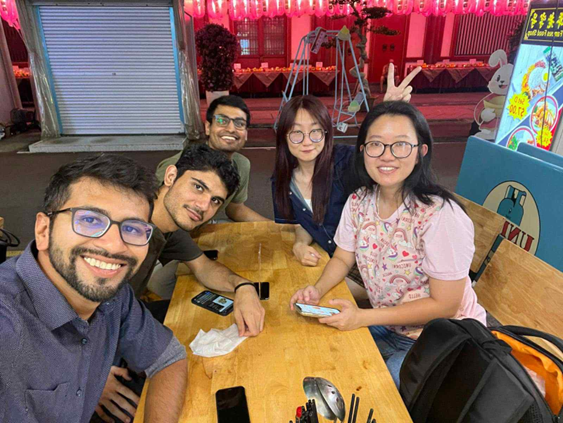
Han celebrating her 28th birthday in Singapore — shortly after LYT, with the same group of friends who remain her closest till today.
Beyond strategy, the classroom’s diversity reshaped her leadership approach. “In a regional role, where I often work with stakeholders from multiple markets and cultures, the ability to build alignment across different perspectives is indispensable,” she adds. “The MBA didn’t just expand my network — it expanded how I think about SEA.”
She now views leadership through a different lens. “Working with classmates from different industries and cultures taught me to listen better, communicate more clearly, and influence without relying on authority,” she says. “Those lessons have already helped me in my current role and will be even more important as I lead broader teams and more complex initiatives.”
Lessons That Last: From the Classroom to Corporate Strategy
Looking back, two experiences from the NUS MBA classroom continue to influence how Han approaches strategy today.
“The first was Corporate Strategy with Professor Kulwant Singh,” she recalls. “His delivery was straightforward, unpretentious, and surprisingly sharp, often punctuated with dry humour that made you stop and think. What I appreciated most was how he broke down strategic thinking into practical, applicable steps. It wasn’t about chasing buzzwords or complex models. It was about clarity.”
That clarity became a cornerstone of her work. “I learned to ask sharper questions, challenge assumptions, and avoid overcomplicating decisions,” she says. “His approach helped me refine how I frame choices, especially when assessing trade-offs across markets or brand roles.”
The second defining experience came through her MBA Consulting Project with PwC Singapore. “We were tasked with repositioning PwC as a digital solutions provider,” she explains. “It was intentionally broad, with stakeholders who had differing views on what success looked like. It was the first time I led a client-facing engagement end-to-end — balancing team dynamics, managing shifting expectations, and delivering a final recommendation to senior leadership.”
The experience, she says, was a turning point in how she communicates strategy. “It pushed me to be more thoughtful in how I communicate strategy to different audiences. Together, these experiences taught me that clarity and calm often carry more weight than complexity, especially in high-stakes settings.”
Learning Through Immersion
Two experiences outside the classroom also left a lasting impression: the China Global Immersion Programme (GIP) and her internship at Signify (formerly Philips Lighting).
“The China GIP gave me a fresh perspective on how business is shaped by local context,” she says. “We visited both multinational and domestic companies, and I was struck by how differently they approached growth, partnerships, and decision-making compared to markets I was more familiar with.”
But the real learning, she adds, often happened between visits. “Whether it was on the bus or over dinner, I found myself learning as much from my classmates’ reflections as I did from the companies themselves,” she reflects. “It helped me become more open-minded, especially when working across cultures.”
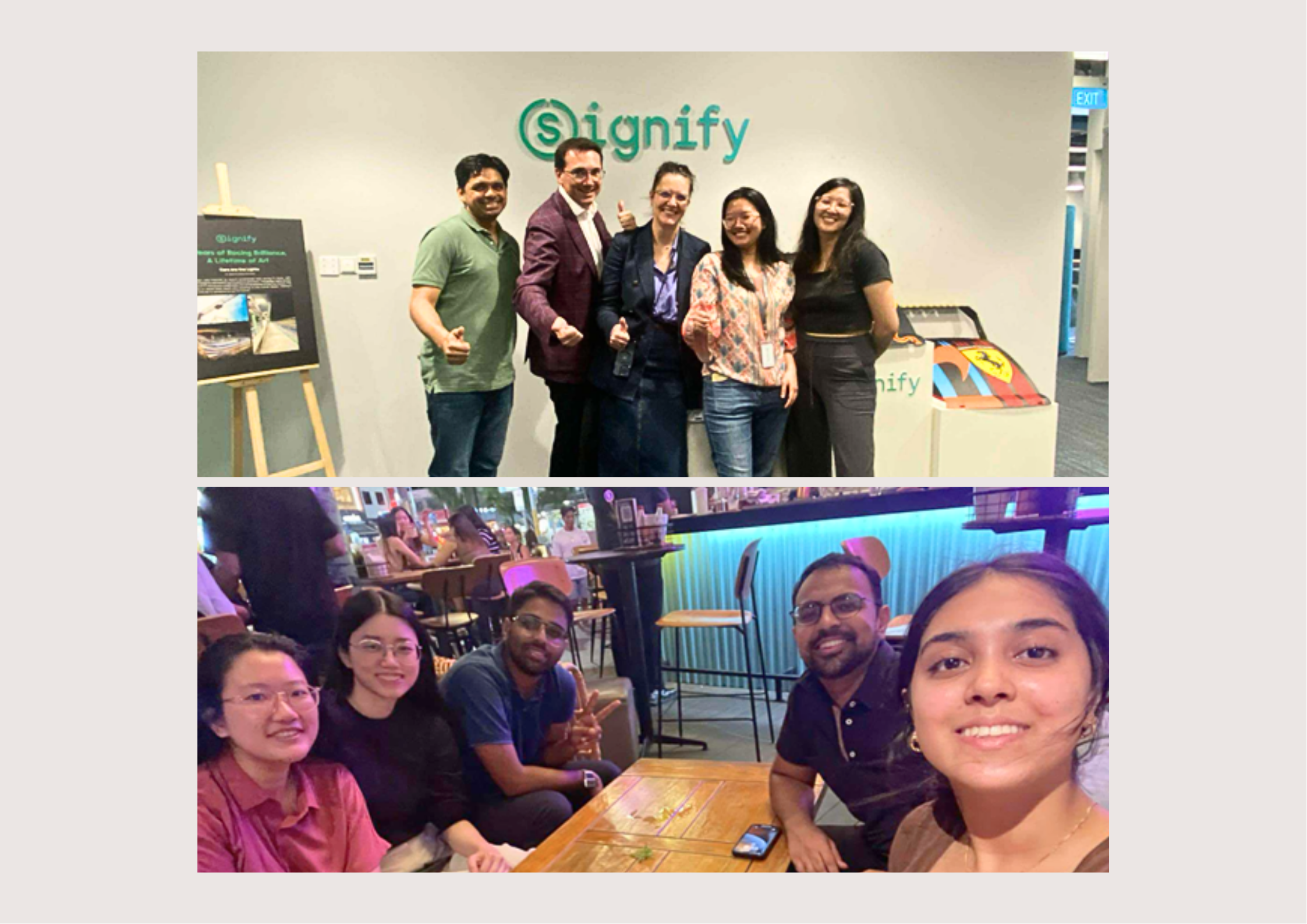
Han with friends she made during her internship at Signify — connections that turned workdays into great memories.
Her internship at Signify presented a different kind of challenge. “I worked on a go-to-market strategy for the Australian market and developed a competitive intelligence library for connected lighting solutions,” she says. “Coming from e-commerce, I had to get up to speed with B2B dynamics quickly, longer decision cycles, and a matrix structure where influence mattered more than formal authority.”
Both experiences, she notes, pushed her beyond her comfort zone. “One expanded how I see markets and people; the other reshaped how I approach business problems. Together, they gave me greater confidence in navigating ambiguity — something I rely on daily in my current role.”
Advice for Future NUS MBA Candidates
Han’s advice for future students is simple yet powerful: “Use the MBA to experiment boldly, but reflect intentionally.”
“This region is fast-growing but incredibly dynamic,” she explains. “Vietnam, Indonesia, Thailand, and Singapore may share certain trends, but how business gets done varies widely. Each market has its own rhythm, expectations, and decision-making styles—context matters. Relationships matter. You won’t succeed here with a one-size-fits-all approach.”
She encourages future candidates to explore widely and connect deeply. “Don’t rush to define your post-MBA path too soon. Try projects across industries. Work with classmates from countries you know nothing about. Say yes to roles where you’re not the expert,” she says. “SEA doesn’t reward perfection; it rewards adaptability, learning agility, and relationship-building.”
Her final advice echoes her own journey. “Treat the MBA as a testing ground,” Han says. “Use it to get clear on where you want to play, how you want to lead, and what value you want to bring across the region. If you stay curious and grounded, Southeast Asia won’t just offer you a job. It will offer a long-term path worth building.”
Inspired by Han’s journey from e-commerce to strategic leadership?
Discover how the NUS MBA empowers professionals to think globally, lead authentically, and create impact across Asia.