“Not About Selling Soaps”: Marketing Insights from NUS MBA with Tuhina Mehrotra
|
|
Tuhina Mehrotra
|
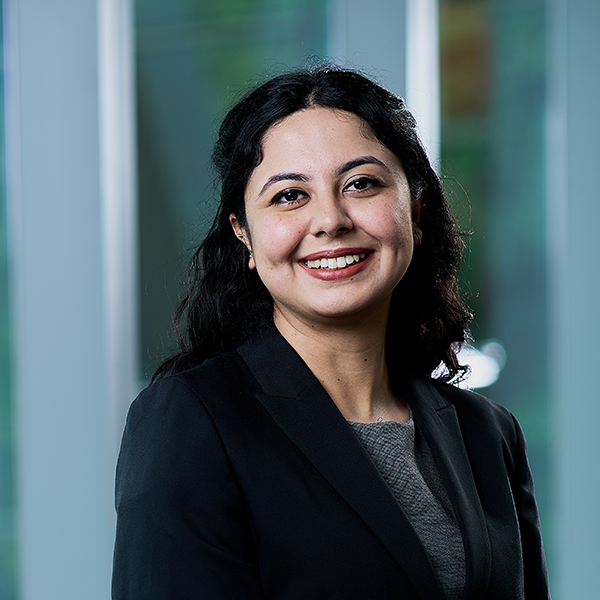
Tuhina Mehrotra started her full-time MBA at NUS Business School in 2023. With a thorough understanding of APAC market dynamics and consumer behaviour, she has worked with brands like Ray-Ban in Singapore and EssenceMediacom in India. Following her MBA, she was hired as a Product Manager at Standard Chartered. Her skills include strategising growth initiatives, transforming data into strategic business insights, stakeholder management, and cross-functional collaboration. Passionate about technology and consumer-focused solutions, she actively pursues opportunities in product development, marketing, and growth. We spoke with her to learn more about her MBA experience and how it has supported her career journey.
*Minor edits were made to responses for clarity
What made you decide to pursue the NUS MBA, and elaborate on why it felt like the right step for you?
I chose the NUS MBA to broaden both my worldview and my career trajectory. After several years working with global teams from India, I wanted to move beyond virtual collaboration and immerse myself in a truly international environment. Meeting peers from diverse industries and cultures in person has been invaluable, as every classroom discussion offered a perspective I could not have gained from a screen.
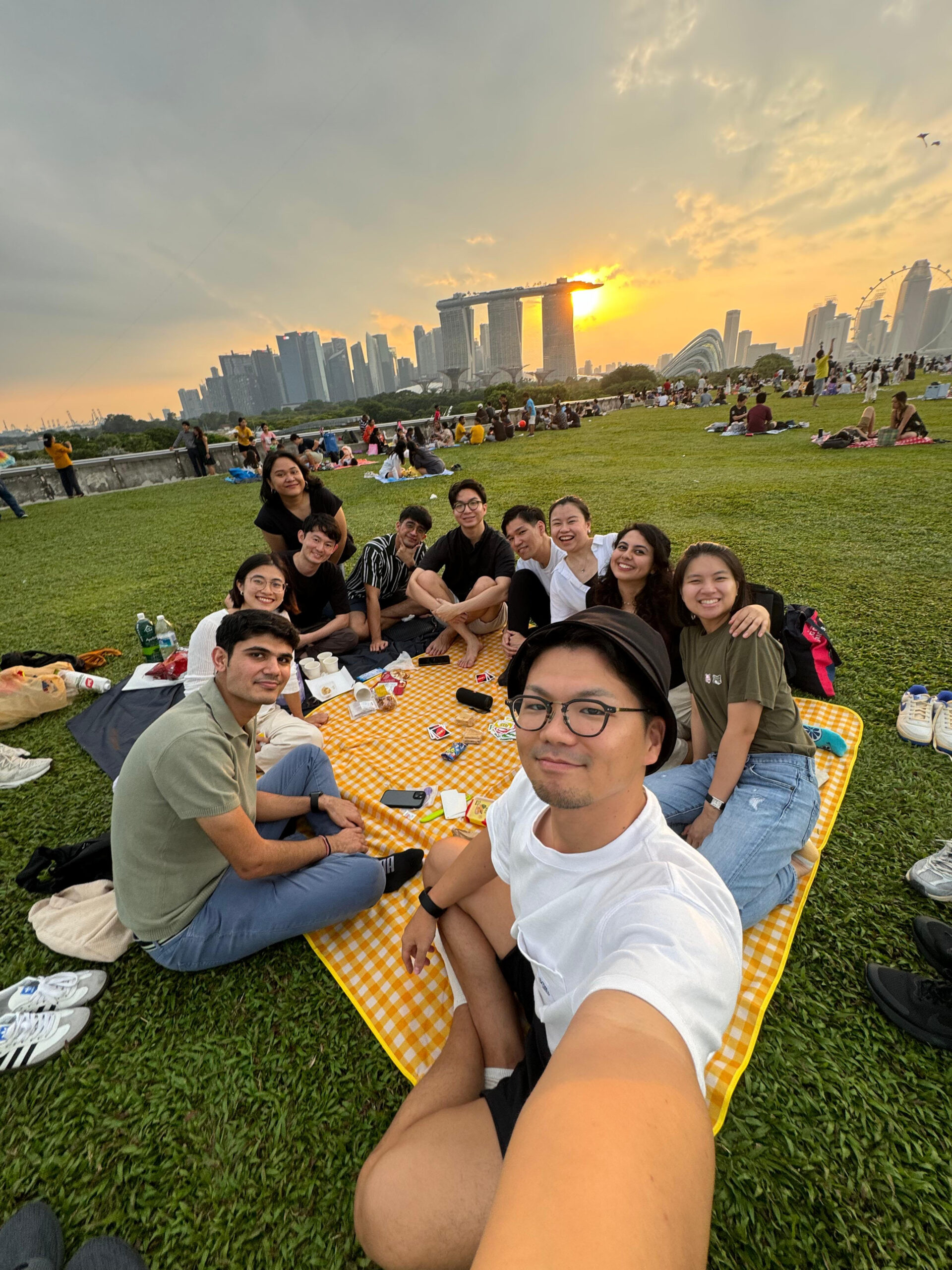
Tuhina and her MBA friends during a picnic at Marina Barrage
Equally important was my ambition to transition into senior management and product-oriented roles. I was looking for a program that would help me step back from day-to-day execution, sharpen my strategic thinking, and build the confidence to lead large, cross-functional initiatives. The NUS MBA’s strong emphasis on Asian business dynamics, along with its global reputation, made it the ideal bridge between my experience in India and the wider opportunities across the region.
Specific elements of the program cemented that choice: the live consulting project provided a demanding yet supportive space to solve real business problems, while the “Lead Your Transformation” bootcamp pushed me to articulate a personal leadership style grounded in self-awareness and resilience.
Looking back, NUS delivered precisely what I hoped for, offering a panoramic understanding of business, a network that spans continents, and the clarity to chart my next chapter in Asia’s rapidly evolving technology and financial landscape. It was a pivotal step that reshaped my perspective on leadership and the impact one can have.
You served as President of the MBA Marketing Club. What’s a moment from that role that stands out as especially rewarding or challenging?
One moment that stands out from my time as President of the MBA Marketing Club began with an off-hand comment a classmate once made: “I don’t want to sell soaps after my MBA.” Meant as a joke, it revealed a deeper perception: many peers equated marketing solely with traditional FMCG brand management. I realised that talented classmates from engineering, finance, or consulting simply hadn’t seen the field’s full scope.

Tuhina and her core team of the NUS MBA Marketing Club
That insight became a turning point. I decided to broaden the conversation and showcase marketing as a strategic, cross-industry discipline. With my core team, I organised speaker sessions and panel discussions that went beyond typical case studies. We explored go-to-market strategy, sales enablement, product-led growth, and evolving hiring trends at the intersection of marketing and technology.
The journey was challenging: convincing busy classmates to attend, securing senior leaders from diverse industries, and designing events that felt relevant to both career switchers and seasoned marketers. Yet, over time, the effort paid off. Peers who once dismissed marketing began seeing its connection to product management, analytics, and growth strategy.
For me, the real success lay in this shift across the cohort: proving that marketing is not about “selling soaps,” but about shaping business outcomes, driving strategy, and making an impact across every sector.
Was there a class, project, or professor during your MBA that gave you a new way of thinking about marketing or leadership?
Honestly, it’s very difficult to choose just one class, but if I had to, Negotiations and Conflict Management with Dr Ameek Kaur was the most transformative course of my MBA. Earlier, I saw negotiation as a straightforward back-and-forth to secure the best outcome. Dr Kaur shattered that myth. Through carefully designed role-plays and debriefs, she revealed how quickly both business and life can unravel if we lack the skill to navigate conflict thoughtfully. We practised everything from framing interests to reading non-verbal cues and managing emotions in high-stakes situations.
A highlight of the course was the global mix of the classroom. Negotiation styles differ dramatically across countries and markets, and hearing classmates share real-life deals that were made or lost due to cultural nuances was eye-opening. It showed me that success depends not just on tactics, but also on understanding context and adapting to it.
The broader takeaway has stayed with me: negotiation skills are invaluable far beyond formal deal-making. Whether aligning a cross-functional team, presenting a strategy, or handling a difficult conversation with a colleague, the ability to guide dialogue with empathy and structure is fundamental. It reinforced that leadership is less about issuing directives and more about enabling progress while ensuring everyone feels heard, which is the kind of leader I aspire to be.
Another professor who left a lasting mark was Professor Joel, who taught Operations Management in the first semester. His class began at 8 a.m. on Mondays, yet the energy was unmistakable. Sunday nights at UTown were a sight, with everyone buried in cases, determined not to miss the vibrant discussions he orchestrated. He turned what many view as a “black-and-white” subject into a living exploration of strategy, culture, and innovation. Three hours flew by as he pushed us to test and refine our opinions through peer debate, and each session ended with fresh perspectives and unexpected insights.
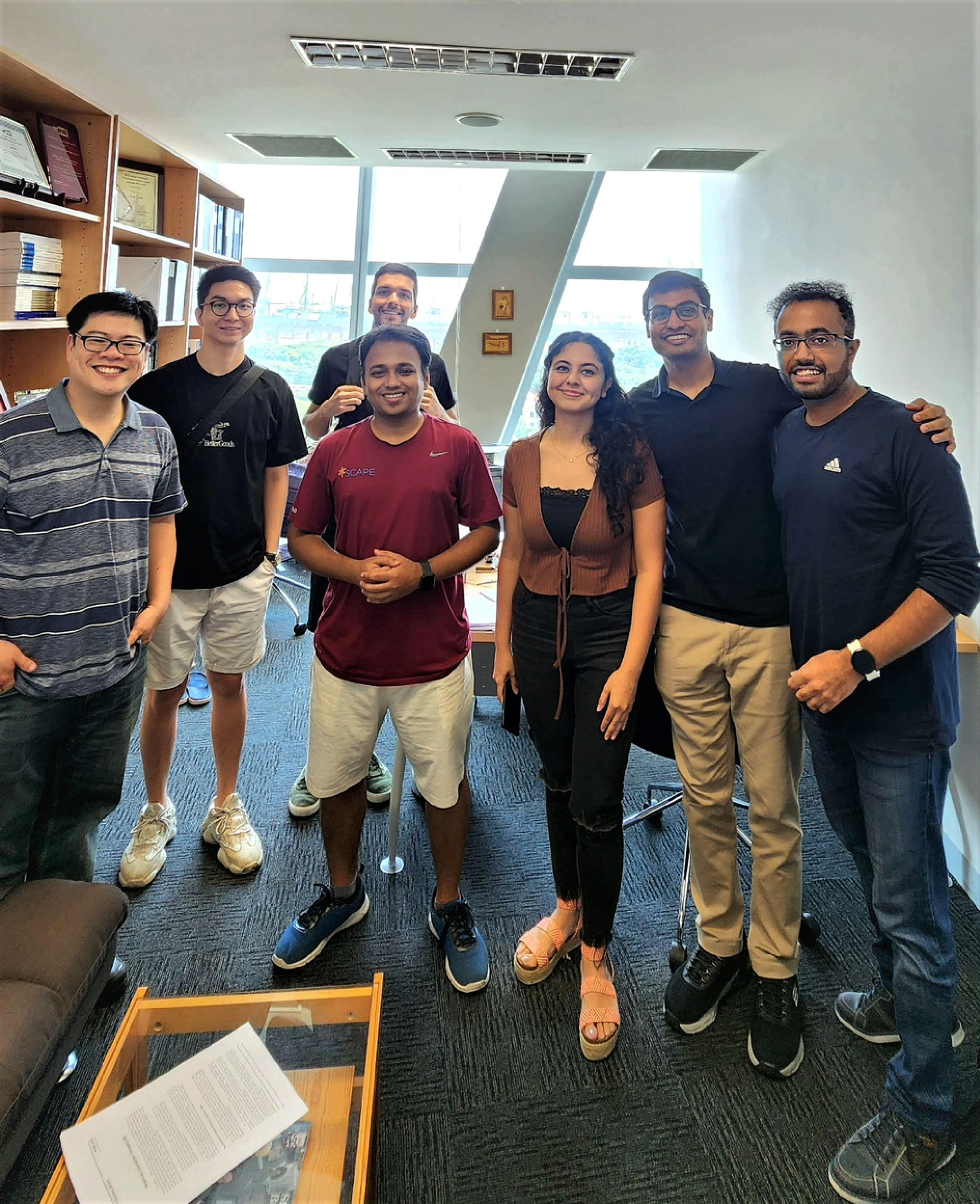
Tuhina in a group photo with Professor Joel
Together, these experiences redefined my understanding of leadership, emphasising curiosity, negotiation, and the ability to move people and ideas forward rather than relying on titles alone.
Student life often brings some of the most memorable experiences. Can you share a story from your time at NUS that you’ll always remember?
One of my favourite memories from NUS was training for the MBA Olympics, where I represented the school in women’s badminton. Sports have a way of breaking silos, and those early mornings at the multipurpose hall showed it. A small group of us would meet before class for practice; some serious rallies, plenty of laughs, and a lot of 100 Plus’ after we were done. Friends from different cohorts would drop by to play or point out small tweaks to our game. It was far from glamorous: just a group of us putting in the sweat, pushing each other, and then rushing to morning lectures.
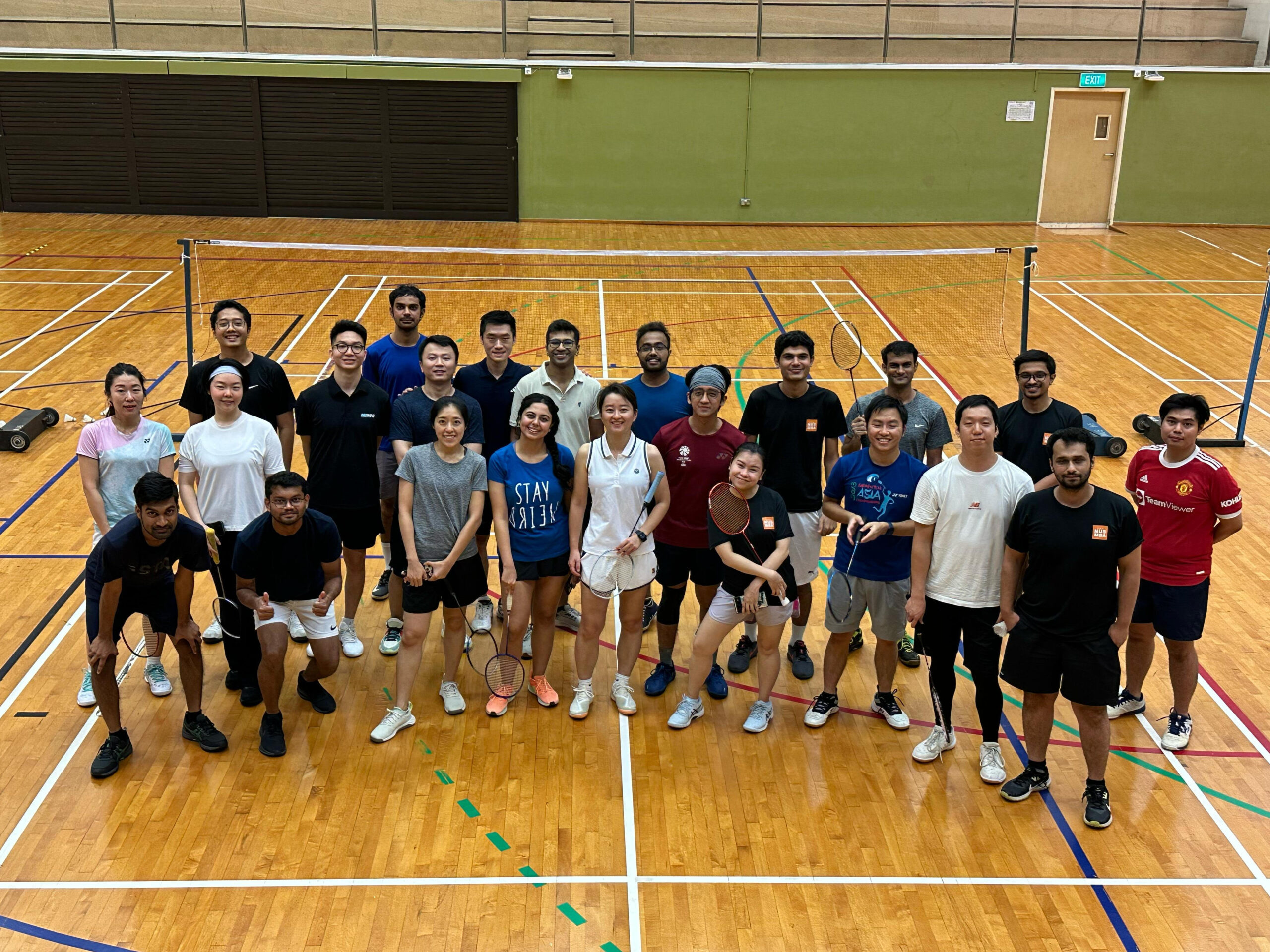
The NUS MBA Olympics Practice Sessions
The tournament itself had a different kind of buzz. Teams from other business schools filled the stands, and everyone cheered for every sport, not just their own. On court, you’re technically alone, but it felt like the whole NUS contingent was behind each shot. Between matches, we were rushing to other courts to yell support for classmates playing football or TT.
What I remember most isn’t any medal or score, it’s the friendships that came out of those weeks. Many of the people I trained with have become the kind of friends I still catch up with whenever our paths cross, whether it’s a quick coffee in Singapore or a late-night call from another city. Looking back, it was a reminder that some of the best MBA moments happen well outside the classroom, in places where you’re just having fun and figuring things out together.
Being in such a diverse and international cohort, what perspectives did you gain that surprised you or changed the way you see business?
Being part of a diverse, international MBA cohort at NUS Business School truly changed how I view business. Working with classmates from diverse industries and international backgrounds, I was constantly challenged to re-examine my own assumptions and cultural norms. I learned that there’s rarely a single “right” solution; each person brings perspectives shaped by their background, market realities, and values. Leadership itself looks different around the world: a collaborative, quiet style can be just as effective as a more assertive one, and in some markets, building personal trust takes precedence over the numbers on a slide. I still remember Japanese teammates explaining how many decisions are essentially settled before a formal meeting even begins, while my Korean classmates modelled almost military precision with schedules and punctuality.
Our negotiations module reinforced these lessons. Role-plays paired me with peers from Europe, Latin America, and various parts of Asia who shared real-life stories of deals made or lost due to cultural nuances. What I thought was a neutral, fact-first style sometimes felt blunt to others; what I read as silence was often careful listening. Practising these techniques in real time taught me to pause, ask questions, and adapt on the spot.
My MBA internship with Ray-Ban further reinforced this perspective. Working closely with my Italian manager exposed me to European business norms, decision-making styles, and feedback methods that differed from anything I had experienced before. It provided me with a deeper, more nuanced understanding of how culture influences leadership and collaboration in practice.
These experiences have stayed with me: respecting context, integrating diverse viewpoints, and continuing to learn beyond any textbook or framework.
The MBA can be demanding, particularly in terms of academics, leadership roles, and career planning. How did you manage those challenges while staying true to your goals?
Balancing academics, leadership roles, and career planning during the MBA was certainly challenging, and I had to be intentional about how I spent my time. Early on, I mapped out my non-negotiables: enrolling in courses that genuinely challenged me and expanded my knowledge, leading the Marketing Club with impact, and carving out dedicated time for career preparation. From there, I worked backwards, blocking weekly “career hours” for networking and applications, treating them like fixed commitments.
I also learned to lean on the community. Classmates shared notes when recruiting deadlines collided with exams, and my club team divided responsibilities so no single person carried the load. That trust made it easier to step back when deadlines or interviews demanded focus.
At the same time, I made sure to enjoy the journey. Movie nights with friends, cultural food immersions that explored Singapore’s diverse cuisine, weekend badminton sessions, or quick kopi catch-ups weren’t just breaks; they helped me recharge and build meaningful connections. Those moments of fun and curiosity reminded me why I was pursuing the MBA in the first place.
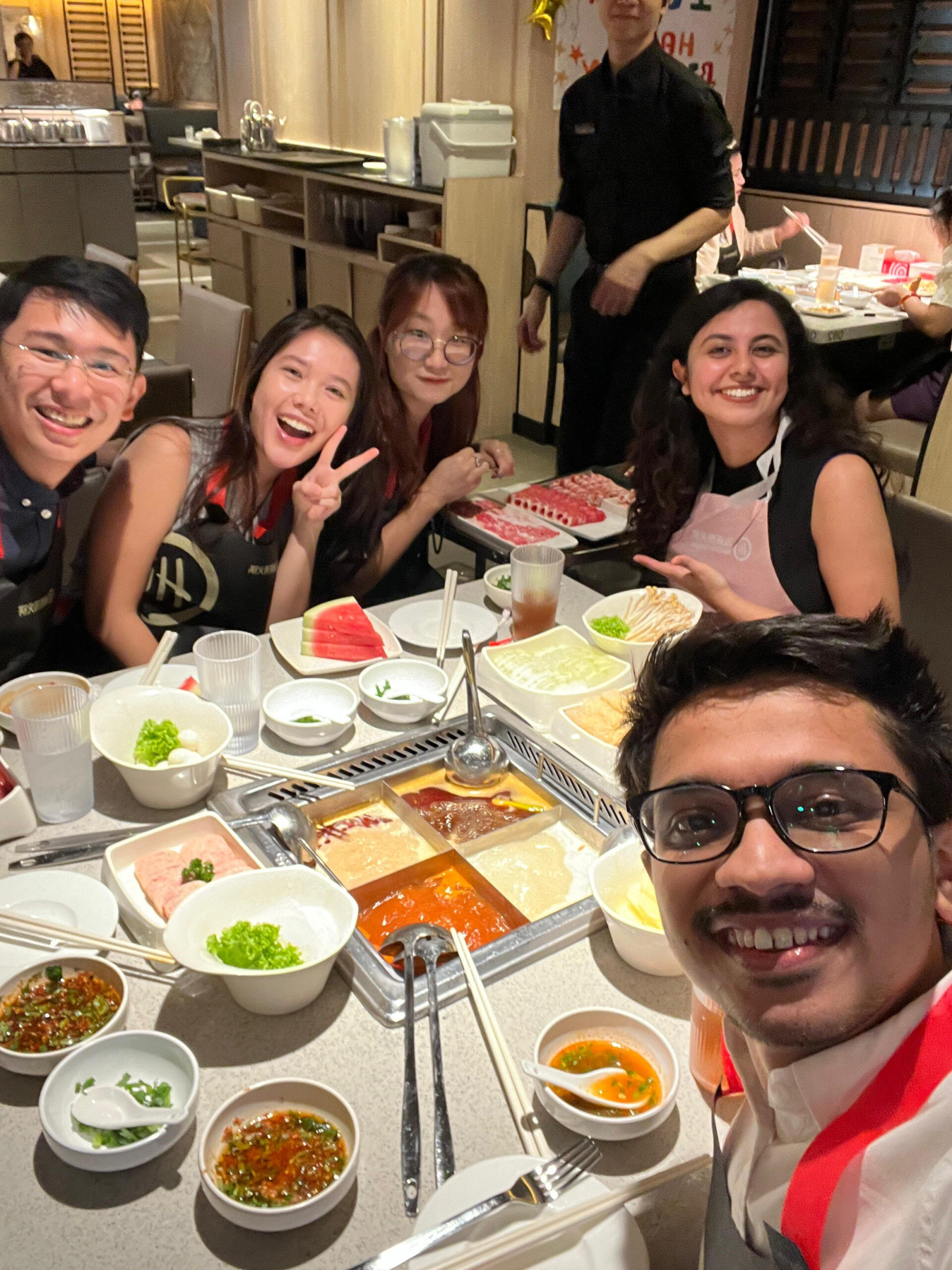
Yummy dinners at Haidilao Hotpot!
Looking back, the key wasn’t trying to do everything at once; it was prioritising what mattered most each week, leaning on others for support, and carving out space to enjoy the experience. That balance allowed me to grow academically, professionally, and personally, without losing sight of the relationships and experiences that made the journey memorable.
Looking ahead, how do you see yourself applying your MBA experience as you continue your career in marketing and leadership?
Looking ahead, one lesson from my MBA that continues to guide me was taught by Professor Jochen during his Service Management module. He told us, “You are MBAs! You will change the way things are done.” That line has stayed with me and comes to mind every time I pause to reflect on my work. It constantly pushes me to ask: How can I make this better? How can I approach a problem in a different way? How can I do the right thing even when it feels like moving a boulder? These are questions that I learned to ask and embrace as a result of the NUS MBA experience.
Through the program, I’ve realised that people are at the heart of every process, strategy, and business decision, from frontline operations to high-level product initiatives. I’ve learned to empathise with stakeholders, to see the bigger picture, and to connect actions to business outcomes rather than treating them in isolation.
Now, whether it’s optimising a process, building a cross-functional strategy, or designing customer journeys, I approach problems with a mindset that balances analytical rigour with human-centred thinking.
As I continue my career in marketing and leadership, these lessons will shape how I drive impact by questioning the status quo, seeking holistic solutions, and leading with both strategy and empathy. The MBA equipped me with tools and frameworks, but more importantly, instilled the confidence to challenge conventions and create meaningful, sustainable change in any business context I enter.
Discover how the NUS MBA can support your personal growth just like Tuhina’s journey. Speak with our admissions team today.