Beyond the Glittering Skyline: Seven Days of Discovery in Dubai
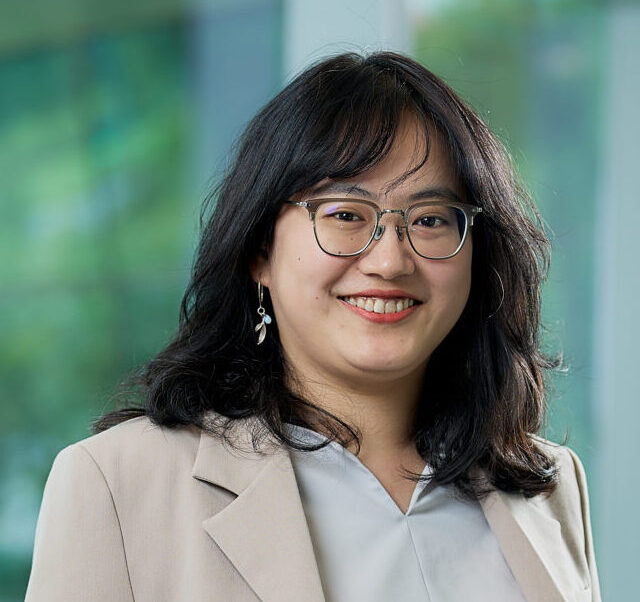
Wan Yu Hung
The NUS MBA Class of 2027
(Full-Time)
Taiwan
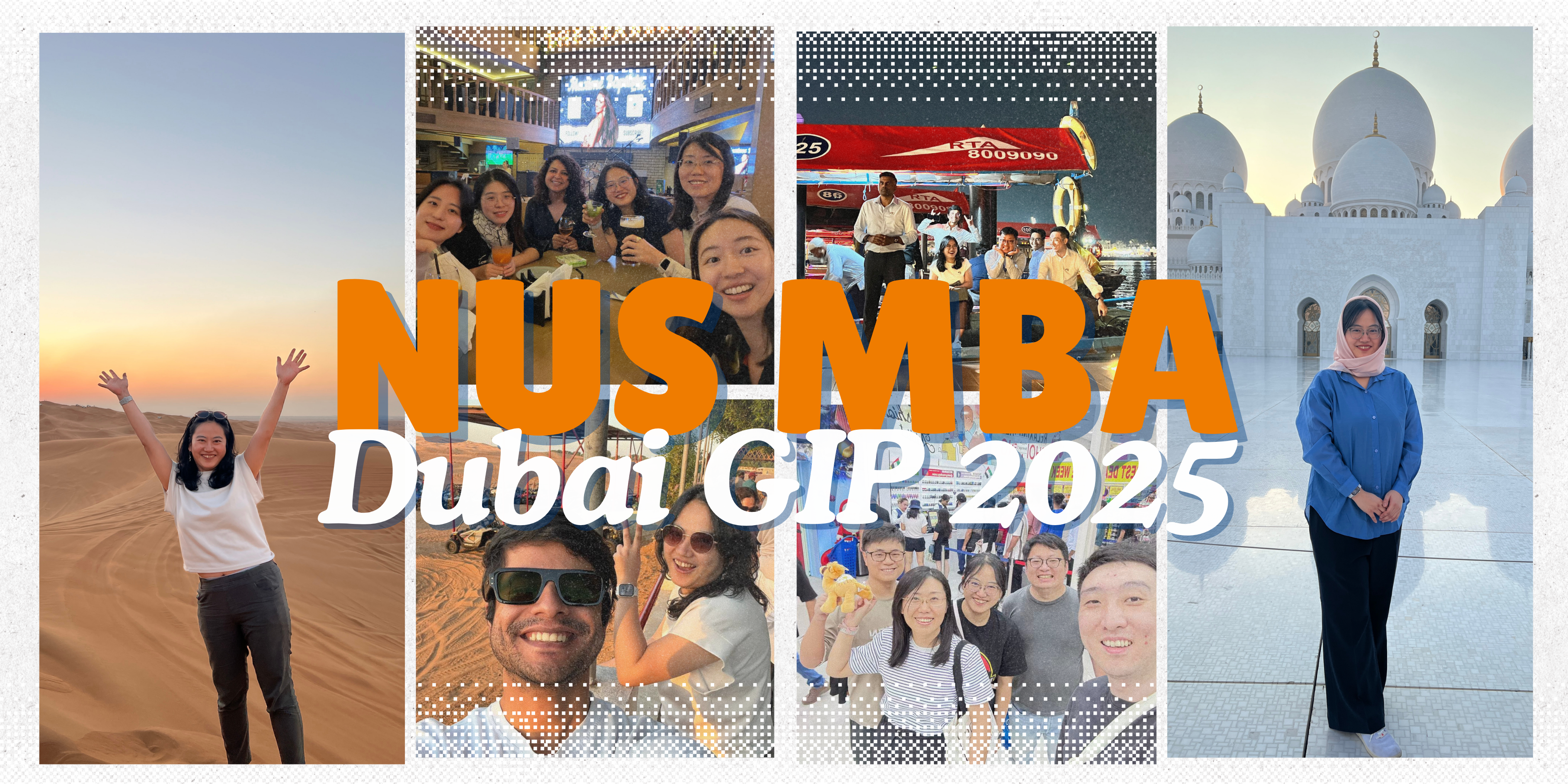
When I landed in Dubai for our Global Immersive Program, I expected to see a mature, polished metropolis. What I discovered instead was something far more compelling: a city still very much in the making, but charging forward with an audacity and determination I hadn’t witnessed in years.
The Program: A Deep Dive into Dubai’s Ambitions
Over seven intensive days, our cohort visited 11 organizations spanning finance, technology, and government institutions. From the Dubai International Financial Centre (DIFC) to Mubadala Investment Company, from fintech startups like Huru to tech giants like Microsoft and G42, we witnessed firsthand how Dubai is positioning itself as a global hub for innovation and capital.
The itinerary was finance-heavy, so much so that I found myself quietly listening as my classmates fired off technical questions I couldn’t formulate. But that discomfort became a learning opportunity. Sometimes the most valuable insights come not from speaking, but from absorbing what others are curious about and how industry leaders respond.
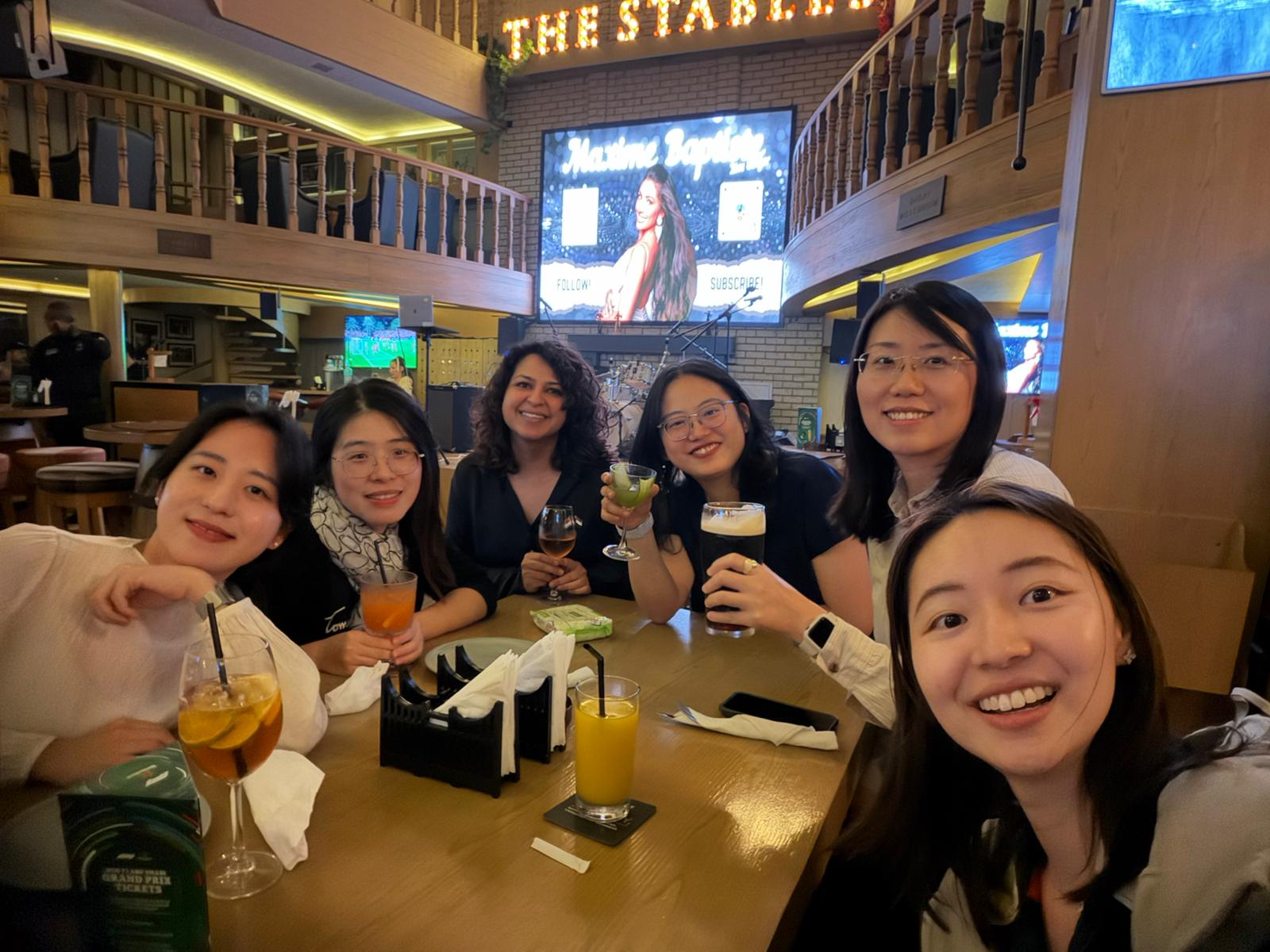
First Impressions: Ambition Over Perfection
Beneath the Instagram-worthy skyline, I found a city refreshingly honest about being a work in progress. Yet what struck me most wasn’t what Dubai has already achieved; it was the palpable momentum everywhere we went. Government officials spoke candidly about diversifying beyond oil. Startup founders described aggressive growth plans.
That energy, that refusal to be limited by natural constraints like extreme heat, water scarcity, or sparse vegetation, resonated deeply with me. Dubai took a difficult hand and played it brilliantly. It made me question: what limiting beliefs am I accepting about my own circumstances?
Key Takeaways: Lessons That Shifted My Perspective
1. There Are No Shortcuts for Groundwork
At Huru, a fintech startup serving the unbanked population, the founder shared something that stayed with me: “There is no shortcut for groundwork.” His team serves blue-collar workers who need hands-on support just to navigate an app. They can’t automate away the human touch, they have to be there, in person, helping users onboard one by one.
He had left a comfortable position at Google to pursue this challenge, backed by royal family support but clear about the upfront investment required. His message was simple: if the work needs doing, you do it. No hacks, no clever pivots around the fundamentals. Real impact demands showing up consistently for the work others might consider beneath them.
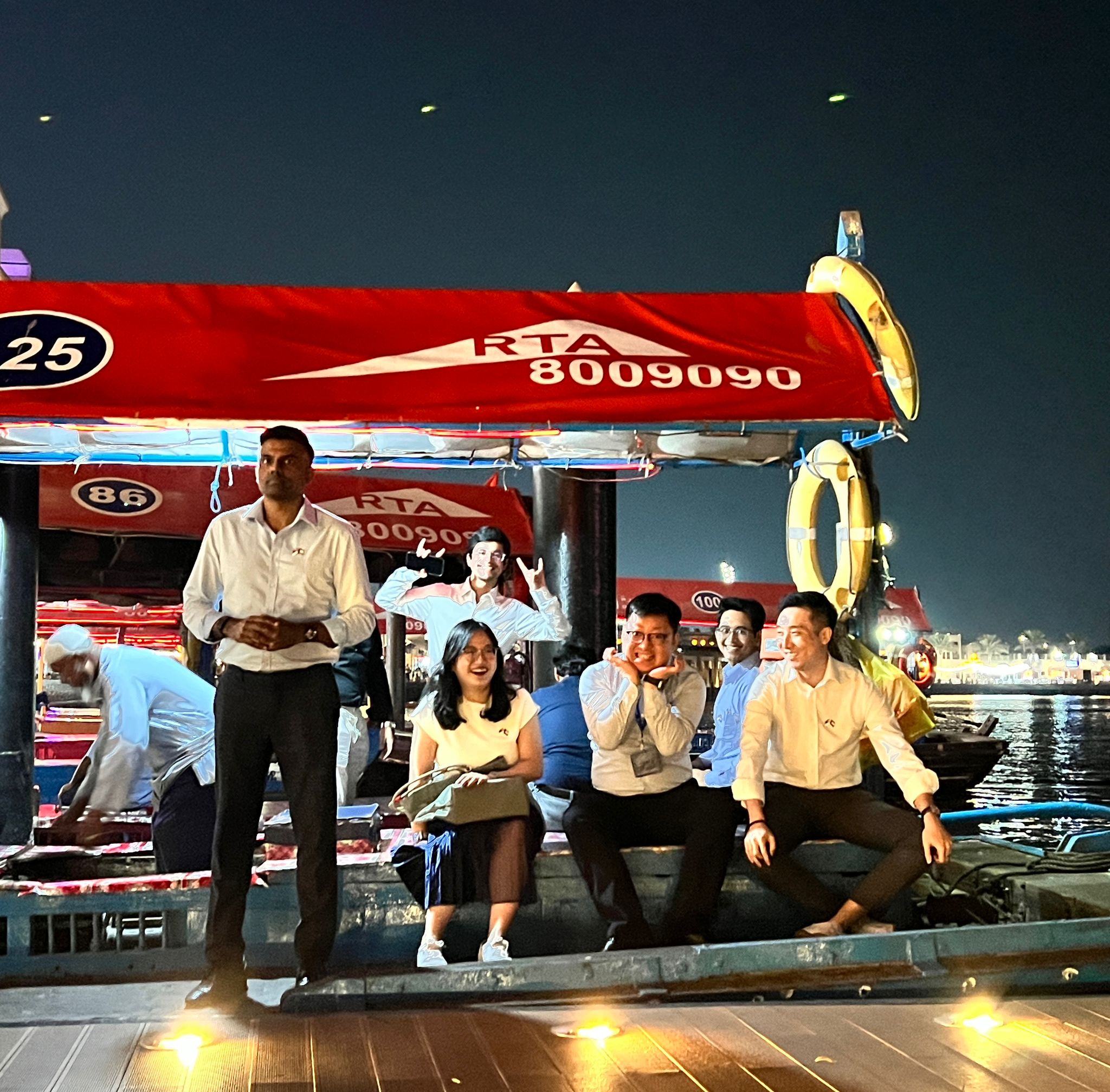
2. Preparation Meets Opportunity, But Stay Flexible
The Microsoft executives we met all emphasized the same paradox: be crystal clear on your goals, but don’t be rigid about the path. They shared stories of lateral moves and circuitous routes that ultimately led them where they wanted to go.
One leader said something that liberated me: “You might take detours, you might go in different directions, but you’ll still reach your destination.” For someone who sometimes feels pressure to have everything mapped out, this was permission to trust the process while maintaining direction.
3. Innovation Isn’t Just About Technology
Dubai Islamic Bank offered perhaps the most intellectually fascinating visit. Unable to charge interest due to religious principles, they’ve built an entire financial system around profit-sharing and co-investment models. Need a mortgage? The bank buys the property, then sells or leases it to you at a negotiated rate.
What seemed like a constraint has become a competitive advantage, attracting not just Muslim clients but anyone seeking alternative financing structures. It’s a masterclass in creative problem-solving: when conventional paths are blocked, invent new ones.
Similarly, Microsoft’s innovation center isn’t just pushing cloud services, they’re applying AI to agriculture, monitoring soil quality, water conditions, and livestock health in partnership with startups. Technology becomes meaningful when it solves real, contextual problems.
Memorable Moments
Beyond boardrooms and presentations, certain moments crystallized the trip’s impact. Standing in the Grand Mosque, surrounded by pristine white marble and geometric perfection, I felt an unexpected sense of calm. Watching the Huru team’s genuine enthusiasm as they described teaching workers to use their app, their energy was infectious.
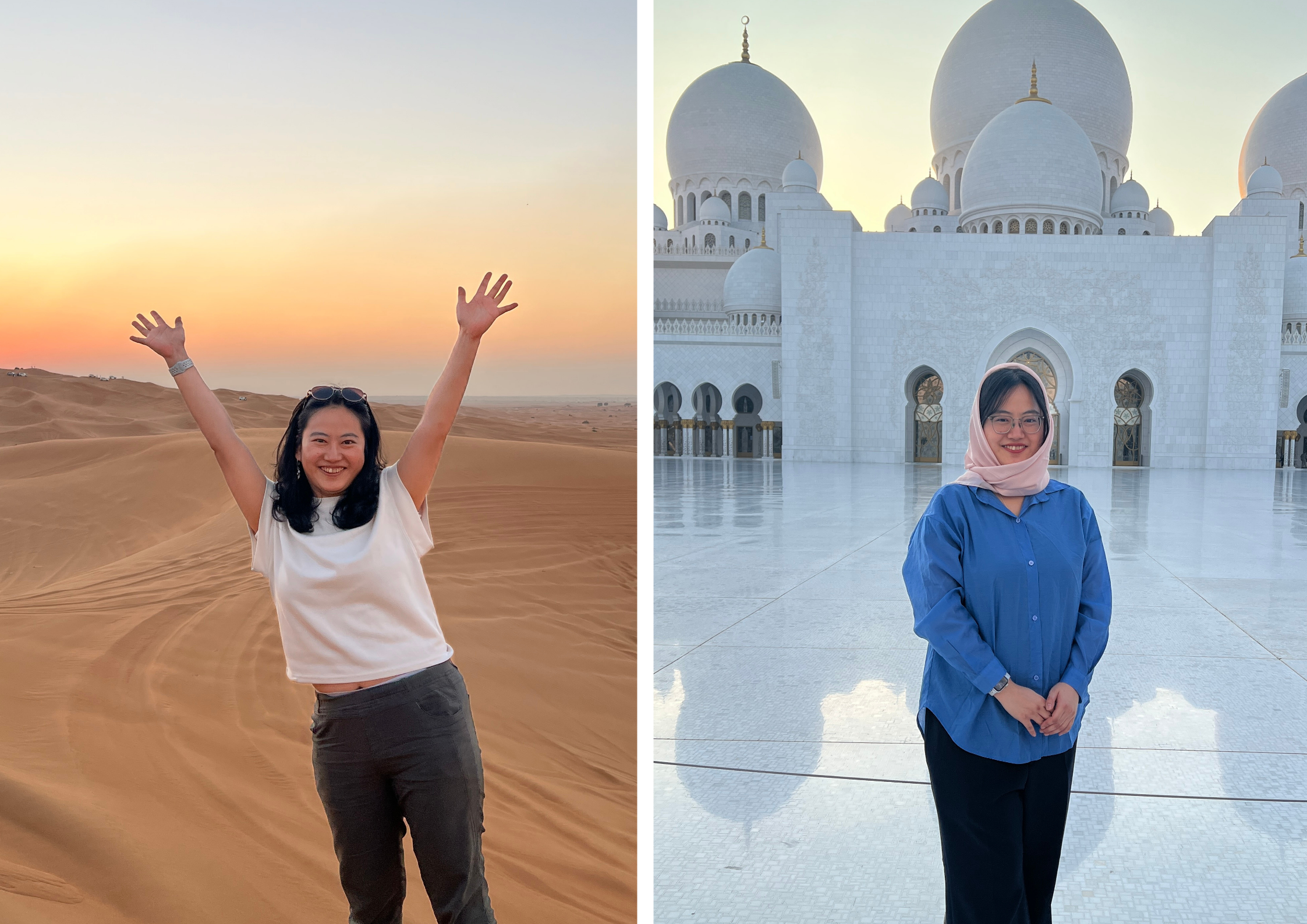
Most memorably: recognizing in myself a shift from observer to potential participant. Halfway through the week, I started genuinely considering Dubai as a place where I could build something, whether developing a SaaS product, exploring real estate opportunities, or pursuing a venture yet unimagined.
Clarifying the Path Forward
This trip didn’t give me all the answers, but it sharpened the questions I need to ask.
I’ve typically avoided finance-heavy environments, but this immersion showed me the machinery that moves capital, and therefore possibility. I don’t need to become a banker, but understanding this world makes me a more credible entrepreneur.
The startup visits reinforced what I already suspected: I’m drawn to building things, not optimizing existing systems. The question isn’t whether to start something, but what and when.
I came to Dubai as a tourist; I’m leaving considering it as a potential base. The city’s openness to founders, accessible capital, and business-friendly infrastructure make it genuinely attractive. Even the “flaws,” the heat, the sparse greenery, feel like honest trades rather than dealbreakers.
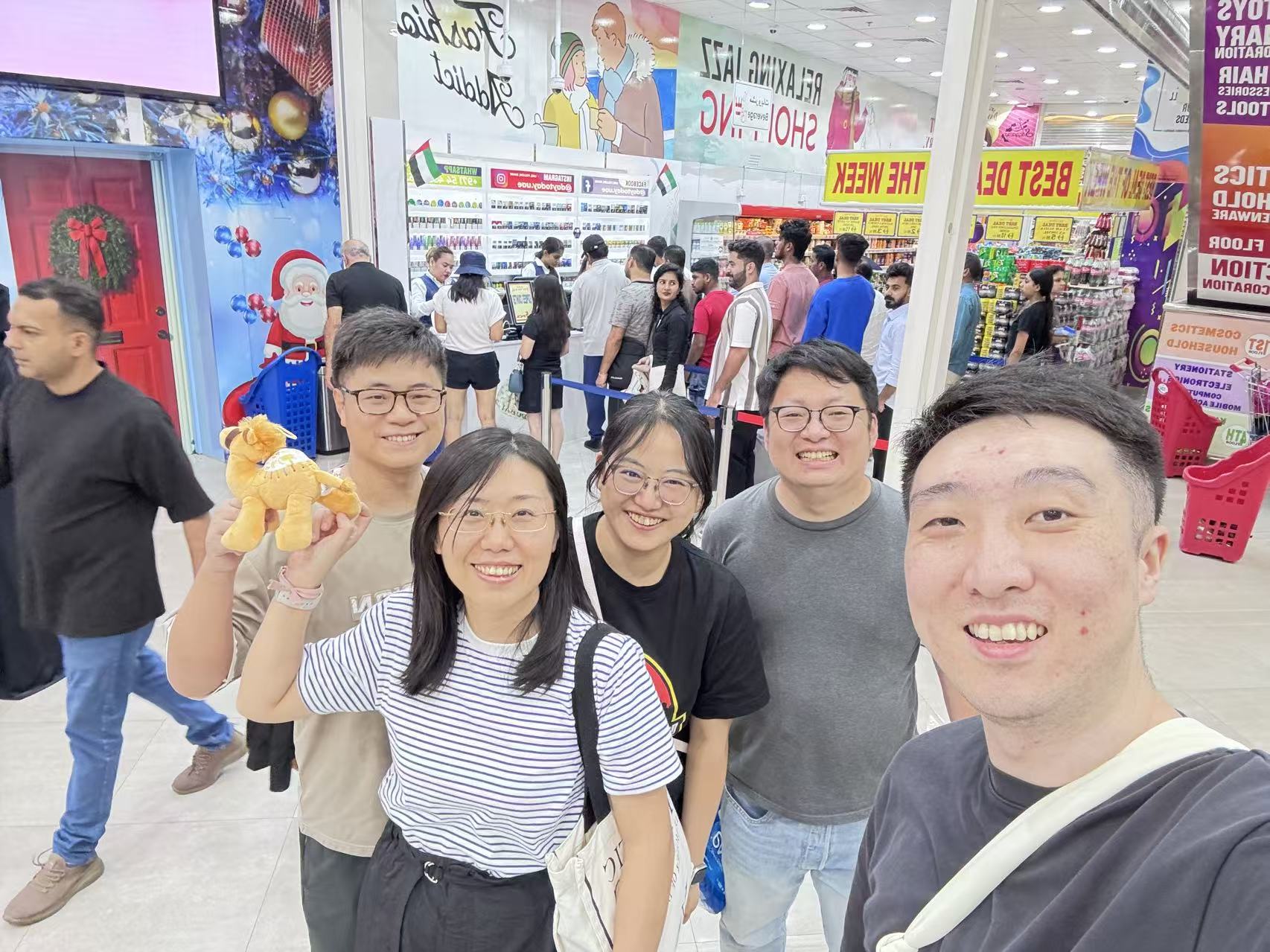
A Final Reflection
Dubai isn’t perfect. But perfection isn’t the point. What Dubai demonstrates is that ambition, speed, and strategic positioning can compensate for natural disadvantages. The city is proof that you can rewrite your constraints into a compelling narrative, if you’re willing to commit fully to the vision.
Most importantly, I left Dubai with clarified conviction: I want to build something meaningful. Where, exactly, and in what form remains open. But the energy I felt in those seven days, in the founders grinding through unglamorous work, in the executives who’d navigated non-linear paths to leadership, in the city itself refusing to accept its designated role as a desert backwater, that energy is now part of my own momentum.
The question isn’t whether to move forward. It’s simply: how fast, and in which direction?
👉 Discover how the NUS MBA Global Immersion Program takes learning beyond the classroom.