The NUS MBA Diaries: Life Through Joshua Macapugay’s Lens

January: New Year, New Crazy Schedule (and a Better Version of Me in the Middle of It)
January didn’t ease me back in — it launched me.
The year started with the usual New Year optimism: fresh pages, big plans, that quiet promise that you’ll be more disciplined, more intentional, more together. And then reality arrived the moment school and work kicked off. My calendar filled up fast. The pace snapped back. And suddenly, my days had zero empty space.
If December was reflection and reset, January was momentum — the kind that forces you to get serious about how you manage your energy, not just your time.
L’Oréal internship starts: beginner mode, but in the best way
Starting my Regional Marketing internship at L’Oréal felt like stepping into a new world with its own language, rhythm, and standards. Beauty isn’t just marketing — it’s culture, identity, aspiration, and emotion, packaged into products that still have to perform commercially across markets.
The first few weeks were a mix of excitement and nerves (the good kind): onboarding calls, meeting new stakeholders across the region, learning how decisions get made, and realizing how nuanced “one campaign” becomes when you’re thinking across different consumer behaviors and contexts.

What surprised me most was how quickly it demanded a macro lens. It wasn’t enough to think, Is this creative strong? The bigger questions kept showing up:
What’s the business objective?
What’s the consumer tension?
What changes market to market?
How do you stay consistent while still being locally relevant?
It felt like the kind of environment that rewards people who can connect the dots — strategy, storytelling, and execution — and I could feel myself being stretched in real time. The internship wasn’t just a new line on my CV. It was a new operating system I had to learn quickly.
New classes: Valuation & M&A, Analytics for Managers
At the same time, classes started — and they were not the “ease into the semester” kind.
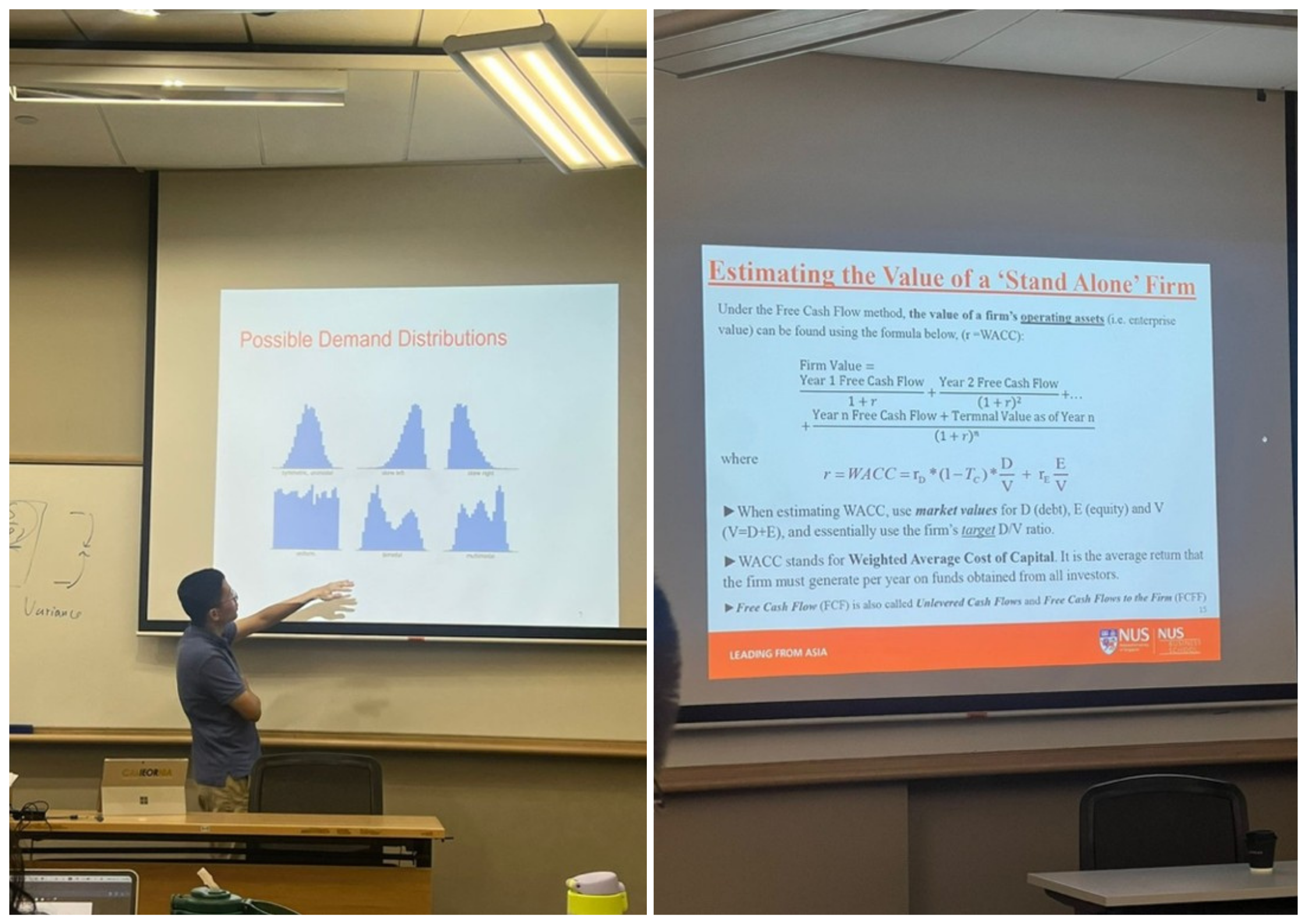
Valuation and M&A immediately put me back into student mode: technical concepts, frameworks, and the humbling feeling of learning something that doesn’t come naturally yet. Coming from a communications and growth background, finance can feel like a different language — more structured, more numbers-driven, and less forgiving if you try to wing it. But it’s also deeply empowering.
I can feel why this matters for the kind of roles I’m moving toward. When you understand value, you understand what businesses actually optimize for. It’s like being handed a new set of glasses — suddenly you start seeing strategy in a more commercial, decision-grade way.
Then there’s Analytics for Managers, which feels like being forced to clean up your thinking. It isn’t just about tools or dashboards. It’s about precision: what question are we really trying to answer, what data matters, what assumptions are we making, and what story does the analysis support?
It’s the kind of class that makes you sharper beyond school — because it trains you to be more deliberate about how you argue, prioritize, and recommend.
Together, these two classes made January feel like mental cross-training: one part commercial fundamentals, one part structured decision-making — both pushing me toward the “macro” version of myself I keep saying I want.
The hidden challenge: not doing everything, but doing the right things well
January also made something very clear: juggling internship and classes isn’t just about working harder. It’s about working smarter — and not burning out in the process.
There’s a specific kind of discipline you need when everything feels important. You can’t win by sheer effort alone. You win by making better choices: protecting deep work, staying organized, being honest about what you can’t do, and learning to trade perfection for progress where it matters.
It wasn’t always pretty. There were days when I felt like I was switching tabs in my brain every 30 minutes. There were moments when my to-do list felt like it was expanding faster than I could complete it. But there was also a strange satisfaction in it — the kind that comes from realizing you’re actually capable of more than your comfort zone.
Welcome back party: the reminder that this is a community, not just a program
In the middle of the chaos, the NUS MBA Welcome Back Party was the reset I didn’t know I needed.
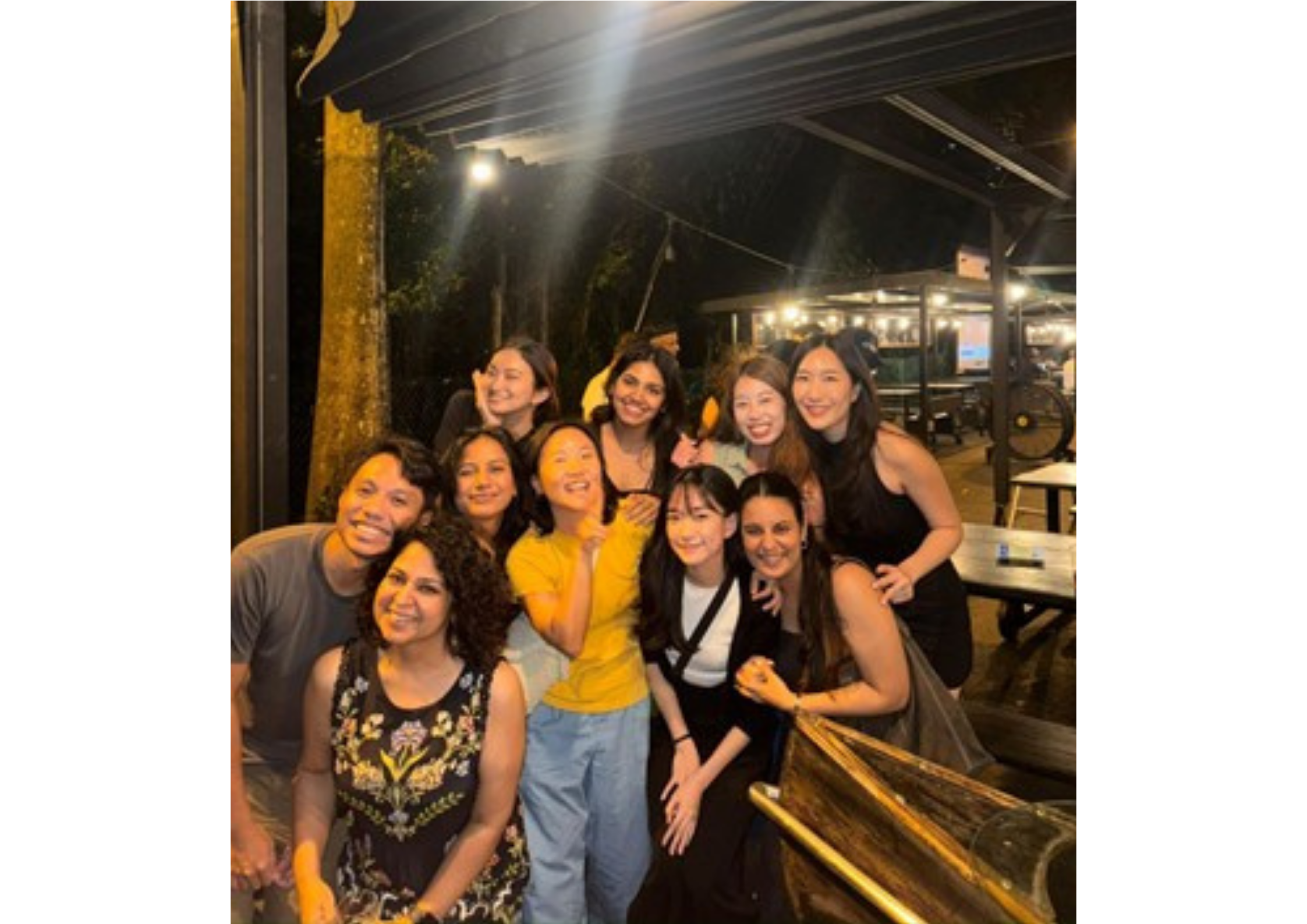
It reminded me that this MBA isn’t just a schedule — it’s people. After everyone came back from break, it felt grounding to reconnect, swap holiday stories, and feel that shared “okay… we’re back” energy.
There’s comfort in being surrounded by people who are also juggling too much, also trying to reinvent themselves, also figuring it out as they go. The work didn’t disappear, but it felt lighter because the experience felt shared.
What January taught me
If I had to name January’s theme, it would be integration. Not just balancing internship and classes, but integrating the version of me that loves storytelling with the version of me that’s learning valuation, analytics, and more structured decision-making.
It’s messy sometimes. It’s uncomfortable often. But it also feels exactly right.
January didn’t give me softness — it gave me pace, pressure, and a clear message: this year will move fast, and I need to move with it — with intention.
And somehow, even with the crazy schedule, I’m excited.

December in Manila: Coffee Chats, Catch-Ups, and the Kind of Reflection You Don’t Schedule
December has always been my favorite season — especially when I get to spend it back home. I packed my bags, brought a few souvenirs, and headed to Changi for a full Christmas season in Manila.
I originally planned for it to be chill, easy, and manageable. But it quickly became busy — in a good way. My calendar shifted from classes to coffee chats, group work to catch-ups, and studies to reflections. I came home thinking I was taking a break. Instead, December became a bridge — between Singapore and Manila, between who I was before the MBA and who I’m becoming in the middle of it.
Reconnecting with home (and keeping the thread going)
I’ve been learning a lot in Singapore: new frameworks, new people, new ways of thinking. But Manila is still where many of my long-term questions live. If I decide to come back after the MBA, I don’t want it to feel like a cold restart. I want it to feel like continuity.
So I reached out to people I’d connected with online and through mutual circles while I was away. Not in a transactional way. More like: I’m still here, still learning, and I want to understand what “next” could look like back home — especially if I’m aiming for roles with more strategic, macro-level influence.
Coffee chat #1: What “strategic” looks like in real life
One of the highlights was a conversation with Gino Borromeo, head of strategic communications at Ayala — a company I’ve long admired for what it represents: institution-building, long-term thinking, and leadership at scale. I brought my classmate and Filipino batchmate, Therese, along for the chat. It felt like the kind of conversation worth sharing — and worth processing together.
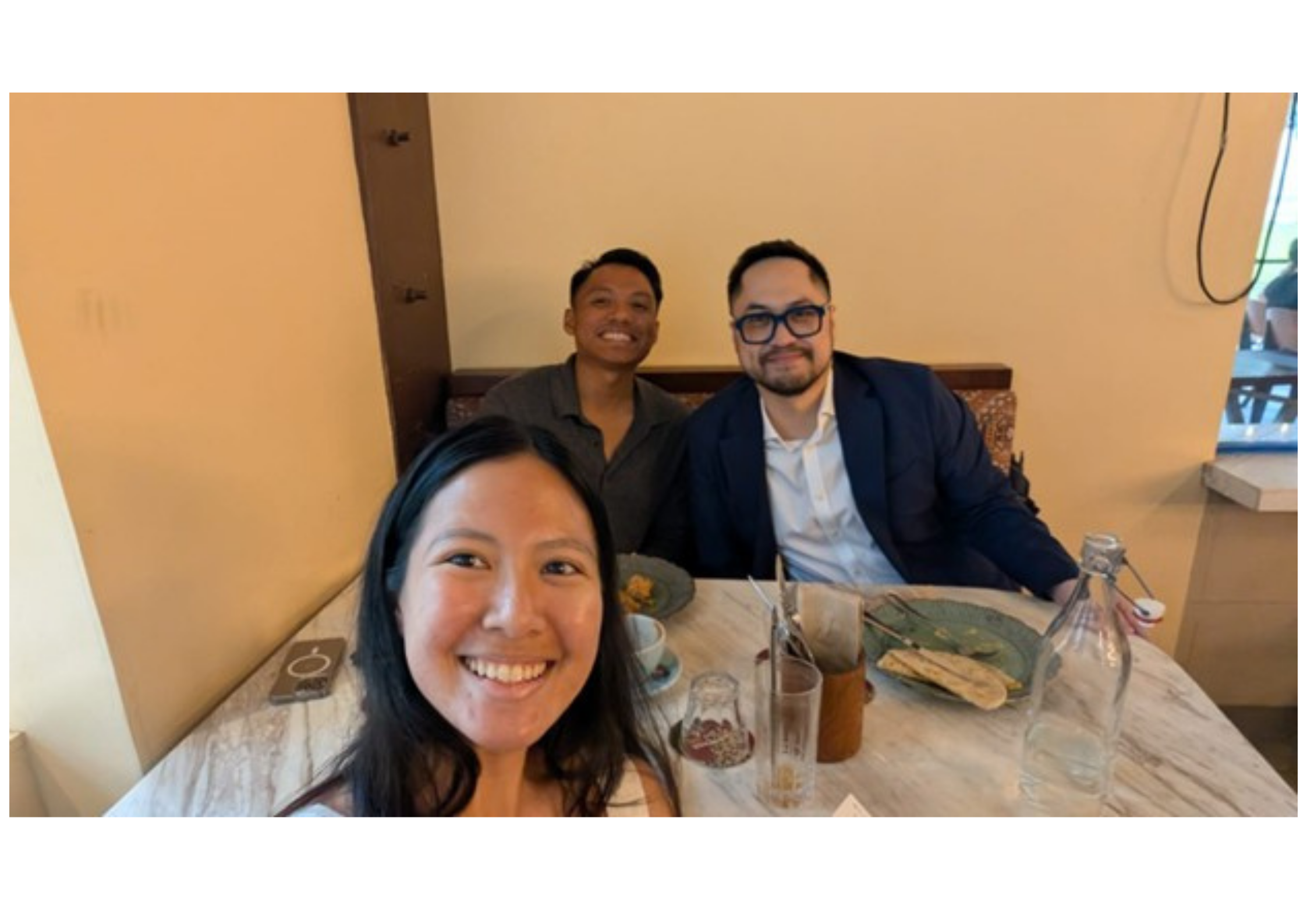
Gino walked us through his career from agency to client-side, including time spent in Singapore working in advertising strategy before coming home. What I appreciated most was how grounded the conversation was. It wasn’t a glossy “career highlight reel.” It was honest insight about transitions, trade-offs, and the realities of navigating work inside a family conglomerate environment — the pace, the stakeholders, the responsibility, and the kind of judgment that gets built over years.
For me, the conversation anchored a question I’ve been sitting with more seriously:
How do you move into more strategic, macro-view roles — even within a communications capacity?
The answer wasn’t a simple “do X, then Y.” It was more about how you show up: learning to zoom out, understanding what really matters to decision-makers, reading context, and building credibility over time. “Strategic” isn’t just a title — it’s a posture. And in that kind of environment, communications isn’t just about messaging; it becomes a lever for alignment, trust, and influence.
I left that coffee chat feeling steadier. Not because everything is suddenly clear — but because I could see a path where storytelling and strategy aren’t separate lanes. They can be the same lane, if you build it that way.
Coffee chat #2: Consulting starts to feel tangible
Another conversation that stayed with me was with Marco Dela Rosa, senior partner and country head of Kearney Manila.
Consulting has always fascinated me — the pace, the problem-solving, the proximity to real decision-making. But it’s one thing to be curious from the outside and another to hear how the work (and the career) is actually built.
We talked about Kearney’s positioning and history — founded in 1926, globally respected, with strong practices across TMT, supply chain, procurement, retail, and FMCG. The Manila office is relatively young, but already doing meaningful work, particularly in Telco and Banking. What struck me was the idea that “lean” doesn’t mean small. It can mean sharp: a team that moves with focus, delivers work that’s grounded in execution, and builds trust by being practical — not theoretical.
That distinction mattered to me. I’m drawn to strategy, but I’m even more drawn to strategies that actually survive reality: organizational constraints, stakeholder complexity, and the messy parts of implementation.
By the end of that chat, consulting felt less like a distant “maybe” and more like a serious post-MBA path I want to explore properly — with intention, not just curiosity.
Switching gears: preparing for L’Oréal
In the middle of Manila energy, I also started preparing for L’Oréal.
It felt like a different kind of preparation — less “studying” and more mindset-setting. Beauty is a new industry for me, and regional work adds another layer: learning how to think across multiple markets with different consumer insights, cultural tensions, and business realities.
I felt excited… and a little nervous. The good kind of nervous. The kind that reminds you you’re still putting yourself in rooms where you have to learn fast and earn confidence through the work. There’s something humbling about being a beginner again — but it also feels right. This MBA chapter isn’t supposed to be comfortable. It’s supposed to stretch me.
Catch-ups that reminded me what “home” really is
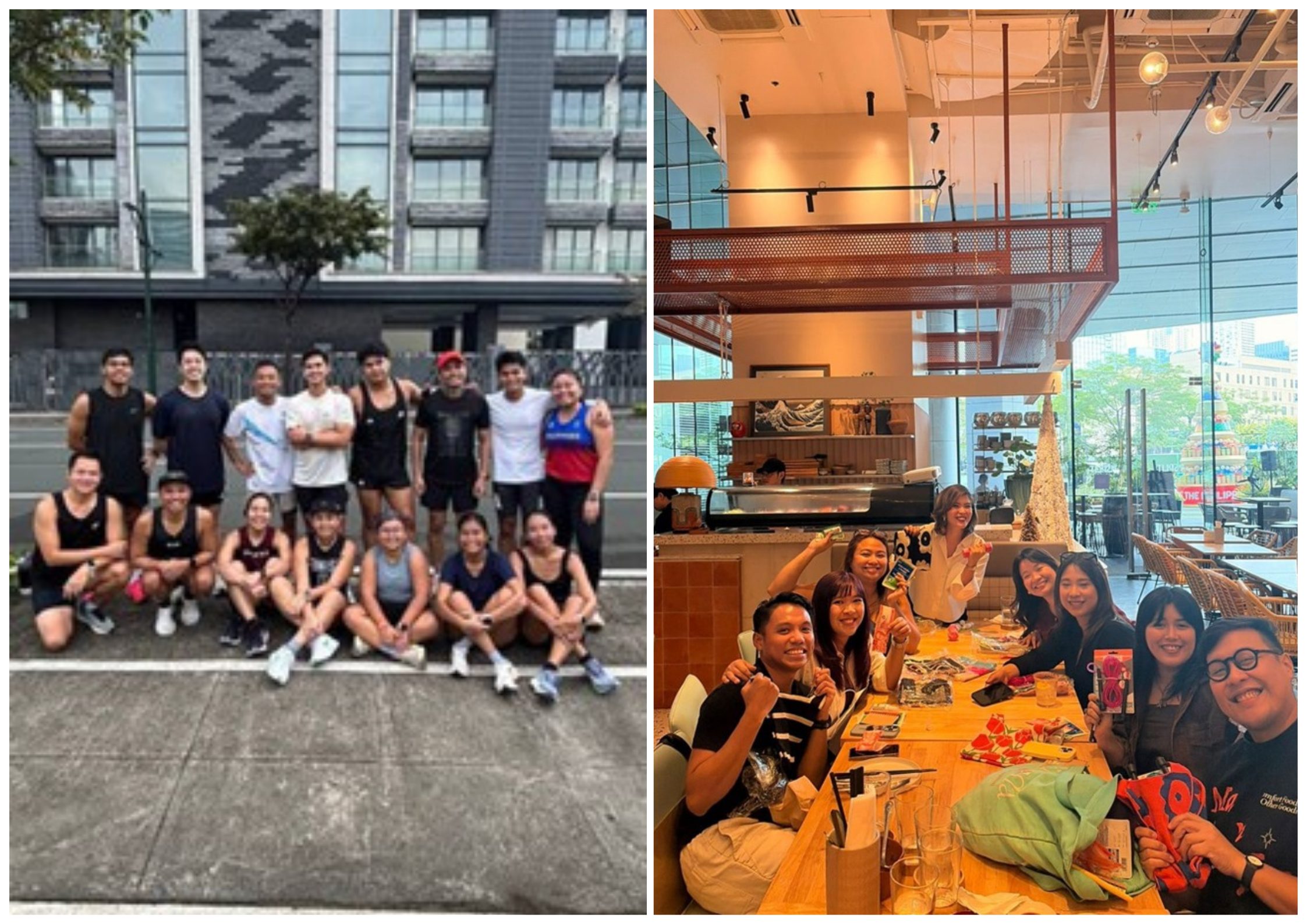
Beyond the coffee chats and career planning, December was also about catching up with friends and family.
It had been more than five months since I left Manila to pursue an MBA in Singapore. And while Singapore is only about 2,400 kilometers away, distance still changes you — your pace, your routines, the way your days are structured. Coming home reminded me there are versions of me that only exist here: the friend who doesn’t need to explain context, the person who slips back into familiar jokes, the one who feels grounded without trying.
I met everyone: high school and college friends, old colleagues, running friends, and more. It was comforting in the simplest way — that feeling that you can be gone for months and still pick up where you left off. Same warmth. Same energy. Same sense that you belong.
And it made me grateful. Not just for the people, but for the reminder that growth doesn’t require abandoning your roots. Sometimes it looks like returning, reconnecting, and realizing you’re allowed to evolve in front of the people who knew you before the big plans.
2026: the anchors I’m carrying forward
As the year ended, I felt myself slipping into planning mode — but in a calmer way than usual. Not panic-planning. Not “new year, new me.” More like: What am I building? What am I learning? And what do I want this to add up to?
Here’s what I’m carrying into 2026:
1) Sydney Marathon
One of the best surprises of the break: I found out I got a slot into the Sydney Marathon 2026 – another world major marathon! It instantly gave 2026 a new anchor — exciting and slightly intimidating in the best way. After Chicago, I know what it takes to train through the unglamorous weeks: early mornings, long runs that test your patience, and the mental game of showing up even when motivation isn’t there. Sydney feels like the next chapter — not just another race, but another reminder that I can commit to something big and earn the finish line one day at a time.
2) Career goals
This is the year I want to move from exploration to sharper intention. December reminded me that opportunities don’t just appear — they compound through relationships, clarity, and sustained effort. Whether it’s consulting, a strategic role in tech, or something that blends storytelling with commercial impact, I want to be deliberate about the direction I’m building toward.
3) A new chapter
More than anything, I’m entering 2026 with a clearer sense that I’m allowed to evolve — and I don’t need to wait until graduation to act like the person I’m becoming. I want choices that reflect the life I’m trying to build: growth, community, meaningful work, and momentum that feels aligned.
Closing reflection
December was supposed to be a break. Instead, it became a bridge — between Singapore and Manila, between reflection and action, and between big plans and the people who keep me grounded.
And honestly, I’m grateful it turned out that way.

Closing the Semester Strong
November arrived like the semester’s closing stretch — where deadlines, decisions, and direction all showed up at once. Somewhere between finals and recruiting, the noise turned into clarity.
November closed my first MBA semester at a pace that didn’t ask for permission. It arrived full and loud, demanding your full attention.
Finals week turned campus into a quiet kind of intense. Study rooms filled earlier, and I slipped into a rhythm I recognized from GMAT days: flashcards, practice quizzes, late-night review sessions, and the discipline of showing up until the work sticks.
But what made November memorable wasn’t only the grind — it was the way everything started to connect. Outside class, I was in execution mode with the Marketing Club, running two back-to-back events that echoed the semester’s biggest question: what stays timeless, and what changes fast?
1. What stayed timeless (storytelling)
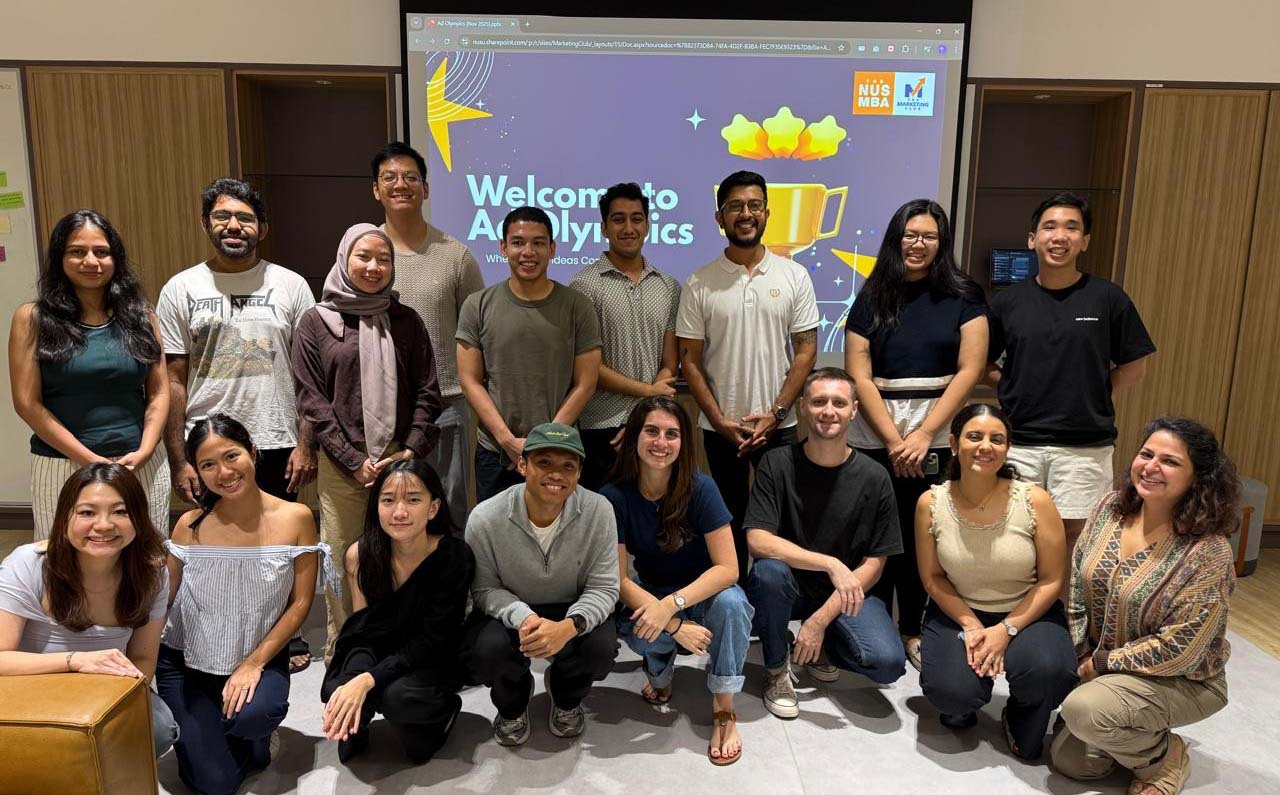
Ad Olympics was a casual sit-down session — an afternoon of watching ads from around the world and reacting in real time. It was laughter-first, but it didn’t stay “light” for long.
Somewhere between the jokes and the hot takes, we kept returning to the same truth: the ads that landed weren’t always the flashiest. They were the ones that understood people — building tension, delivering a payoff, and leaving you feeling something you didn’t expect.
It reminded me that storytelling isn’t a nice-to-have in marketing. Tools change. Platforms change. But the human brain still responds to meaning, emotion, and narrative — and great work still starts there.
2) What shifted (AI + technical fluency)
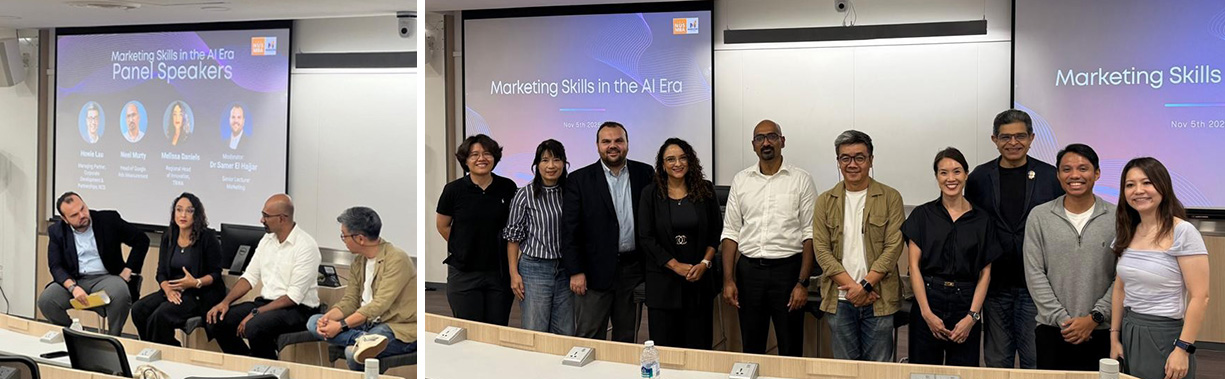
That same night, we hosted a panel on AI and the future of marketing with the Marketing Department, featuring leaders from NCS and Google, moderated by Dr. Samer El Hajjar.
The takeaway wasn’t “AI is coming.” The takeaway was more practical: marketers stay relevant by building fluency.
Not fluency for trend-chasing, but the kind that lets you integrate AI across the value chain — research, insight generation, creative development, testing, and measurement. The point isn’t to replace the craft. It’s to expand it.
What stayed with me was the balance: build the technical muscle, while protecting what remains timeless — taste, judgment, and the ability to tell a story that earns attention.
3) What expanded (PE + consulting exploration)
November also opened a door I didn’t expect to take seriously so soon: Private Equity.
I used to picture PE as an opaque world — backroom deals and capital movement — shaped more by movies than reality. But the more I listened, the more grounded the story became: value creation.
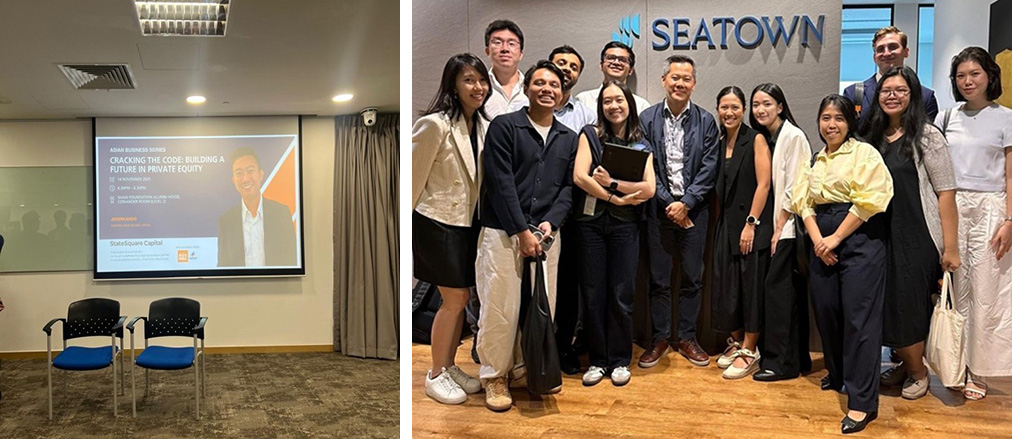
When businesses are improved and scaled responsibly — better operations, sharper execution, clearer strategy — the outcome can be bigger than a transaction. Fireside chats with SquareState Capital and SeaTown made PE feel less “mysterious” and more like a discipline tied to how companies actually work.
In parallel, I doubled down on consulting exploration. Through warm intros and coffee chats across Kearney, Bain, and BCG, I looked for clarity: what does the work demand, and what separates surface-level analysis from real problem solving?
A consistent picture emerged: structured thinking, strong communication, comfort with ambiguity — and the discipline to go beyond first answers. The best consultants weren’t the ones with the flashiest frameworks; they were the ones who could sharpen an issue tree, test a hypothesis, and land a point clearly enough that a room could move.
4) What landed (recruiting + L’Oréal)
Recruiting was the background hum underneath everything else: applications, interviews, assessment centres, recruiter conversations — plus a lot of learning in between.
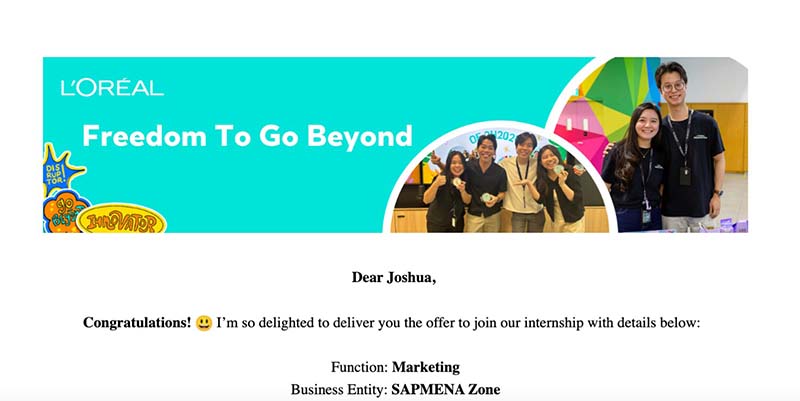
By the end of the month, I secured a credit-bearing internship with L’Oréal as a Regional Marketing Intern for Semester 2.
I’m excited — not just because it’s a strong role, but because it feels like a step that can compound into 2026 if I execute well. I also leaned on the programmes and careers offices to pressure-test fit and negotiate practical details — a reminder that owning your path includes owning the questions you ask.
5) What grounded me (sailing + Singapore)
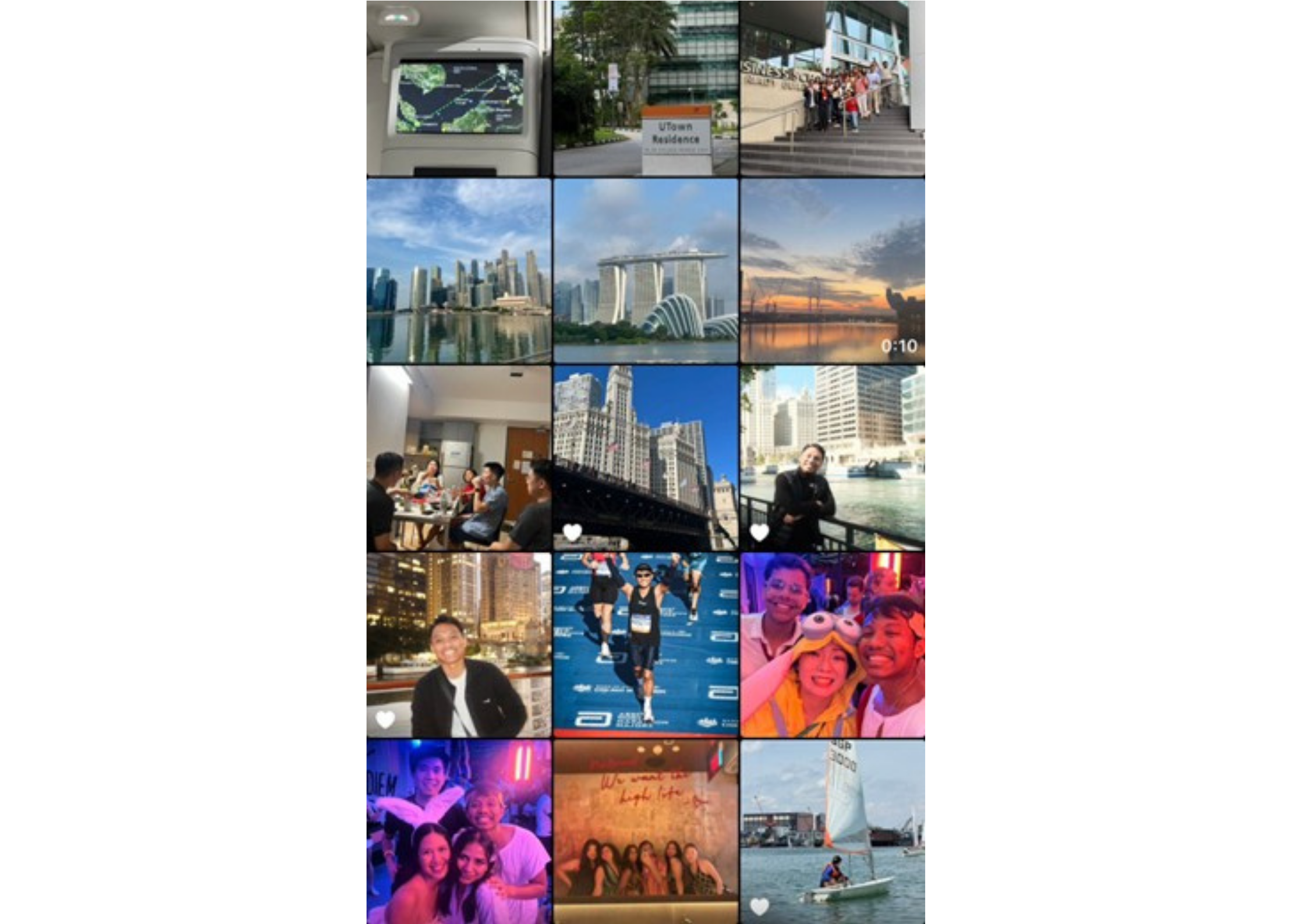
Outside the career sprint, I ended the semester by trying something new: sailing.
I joined a basic sailing class through the NUS Sailing Team at the Republic of Singapore Yacht Club. It was refreshing to be a beginner again.
It felt like a quiet lesson for the semester: you can’t brute-force everything. Sometimes the better move is to read the wind, adjust your sails, and stay steady. I also made time for museums, parks, and slow days with friends.

Closing
November was intense, fast, and demanding — but clarifying.
It reminded me what stays timeless (storytelling), what’s shifting fast (AI and technical fluency), and what I’m expanding into (consulting and value creation). And it gave me proof that I can carry a full season — and still keep moments that feel human.
I’m ending the semester tired, grateful, and genuinely excited for what this momentum could become in 2026.

October Momentum: Finding My Pace in the NUS MBA
What began as scattered exploration slowly formed into a sense of direction. October became the month where conversations, opportunities, and small commitments aligned into real momentum.
October marked a quiet but undeniable turning point in my MBA journey. If September felt like wandering through possibilities, October felt like the moment I finally started to move — intentionally, steadily, and with purpose. Classes deepened, club commitments accelerated, and career plotting shifted from hypothetical to actionable. It was the month momentum began to show up not in dramatic breakthroughs, but in the small, consistent steps that started shaping my path forward.
Below are the three layers of momentum that defined my October: career, community, and personal growth.
Career Momentum: When Exploration Turned Into Action
This month, I began approaching career planning with clearer intention. Through BizCareers, I joined two MBA-exclusive immersions with Amazon Japan and Restaurant Brands International (RBI) — both of which expanded my understanding of where my skills could fit post-MBA.
The Amazon session was particularly meaningful. I’ve long been fascinated by the idea of working in Japan, shaped by conversations with Japanese classmates and many personal trips to Tokyo. Meeting Harunobu Tokuda, an NUS MBA alumnus who entered Amazon’s Pathways Operations Leadership Development Program, made that possibility feel much closer. Hearing how the Pathways LDP prepares MBAs for fast-paced operations leadership roles revealed a career track I hadn’t previously considered seriously.
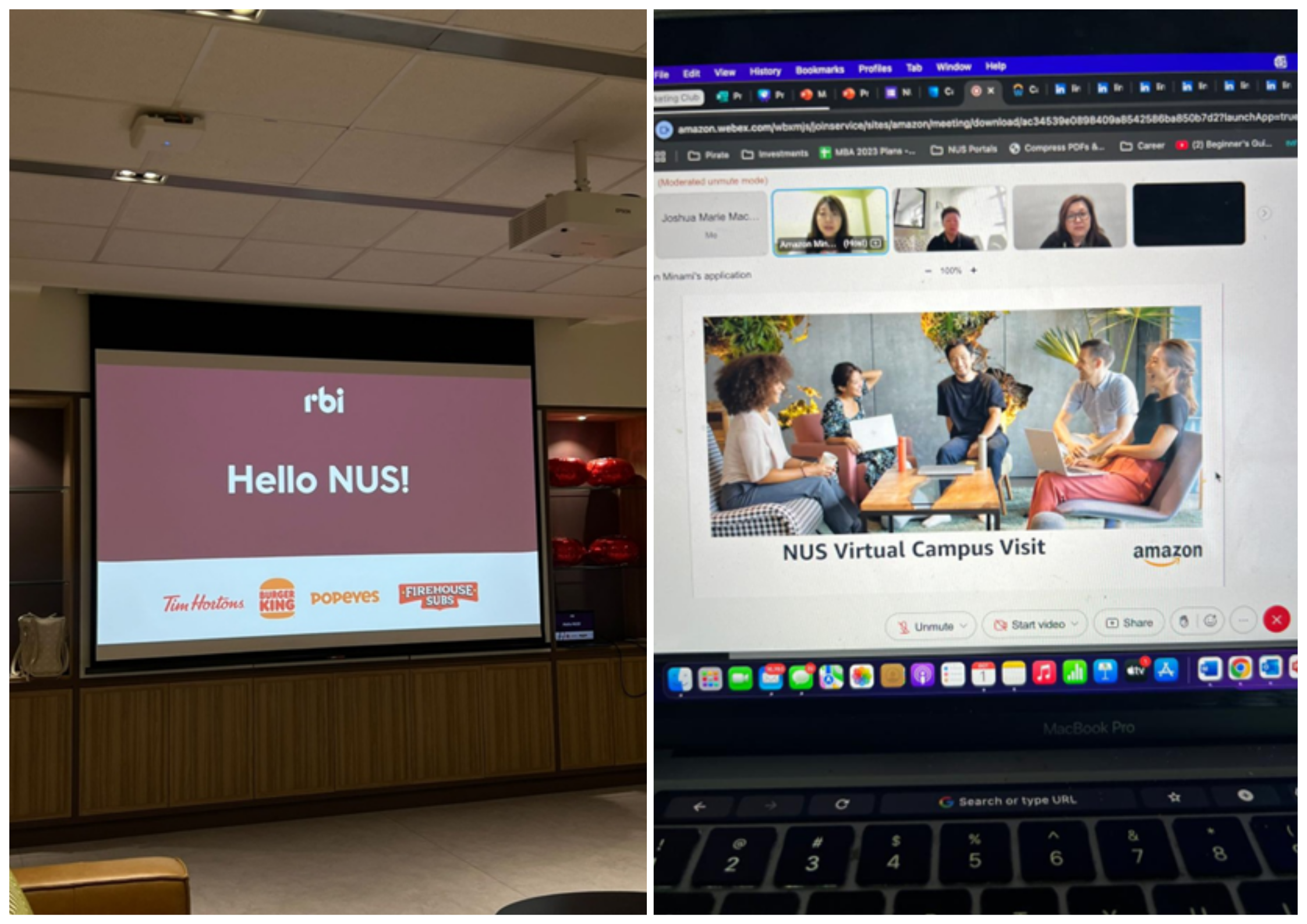
The session with RBI offered a different kind of insight. I came in with only a surface-level understanding of the QSR industry, but was surprised by how deeply operations, digital strategy, customer experience, and retail intersect in this space. Learning about RBI’s Leadership Development Program for MBA graduates, and hearing directly from senior leaders, made me appreciate the strategic depth of an industry I once overlooked.
My exploration also extended into tech and fintech. Through NUS TalentConnect, I joined the PayPal Recruitment Talk 2026 and met members of their team virtually, hearing their perspective on digital payments and financial inclusion — themes close to my heart from my time at Grab. Later, at Crypto Connect with Coinbase, I attended a fireside chat with Hassan Ahmed, Coinbase’s Country Director. His insights into regulation, tokenization, and AI’s growing role in the crypto ecosystem helped ground a sector I had previously seen mostly from the consumer side.
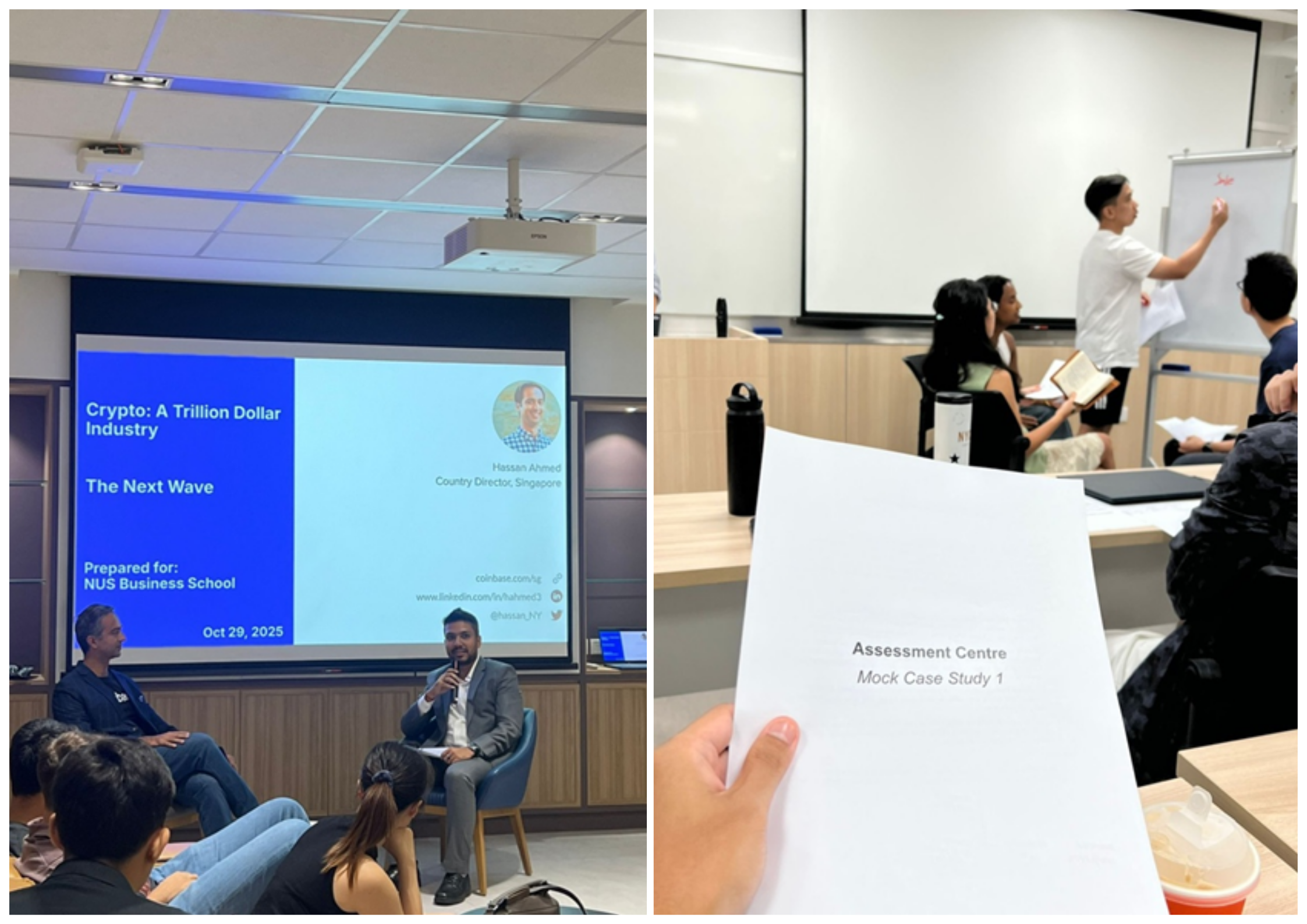
To support this growing momentum, I invested time in sharpening my own career readiness. I refined my resume through VMock, practiced structured thinking with CaseCoach, and pushed myself by joining the Tech Assessment Centre. Under coaches Zach Xiong (former Kearney, now YouTube) and Asad Hasanali (former McKinsey, now LXA Capital), I learned frameworks for tackling assessment-centre style problems — a rare opportunity to receive high-level feedback on problem-solving under pressure.
October was the month career exploration stopped being passive. I wasn’t just absorbing information anymore; I was preparing myself to compete.
Relationship Momentum: When Networking Became Community
Equally important to my growth this month were the people I met — and the deeper ways I began connecting with the NUS and Singapore ecosystems.
At the SG Startup Ecosystem Networking Night, I learned just how powerful NUS’s entrepreneurial engine is. With 11 NUS-supported unicorns emerging from initiatives like NUS Overseas Colleges (NOC), BLOCK71, and the Graduate Research Innovation Programme (GRIP), I was reminded how much innovation sits right here on campus. As someone interested in entrepreneurship and value creation, the event reaffirmed that future founders and scale-stage leaders are not far away — they’re often just across the room.
Another highlight was “Scaling for Good (from Ideas to Impact)”, hosted by the Sustainability & Ethics Club. The founders who spoke are pioneering more inclusive and sustainable models — from PWD-friendly hiring practices to early circular-economy foundations. Their stories challenged me to think about how responsible design can be embedded into strategy from day one.
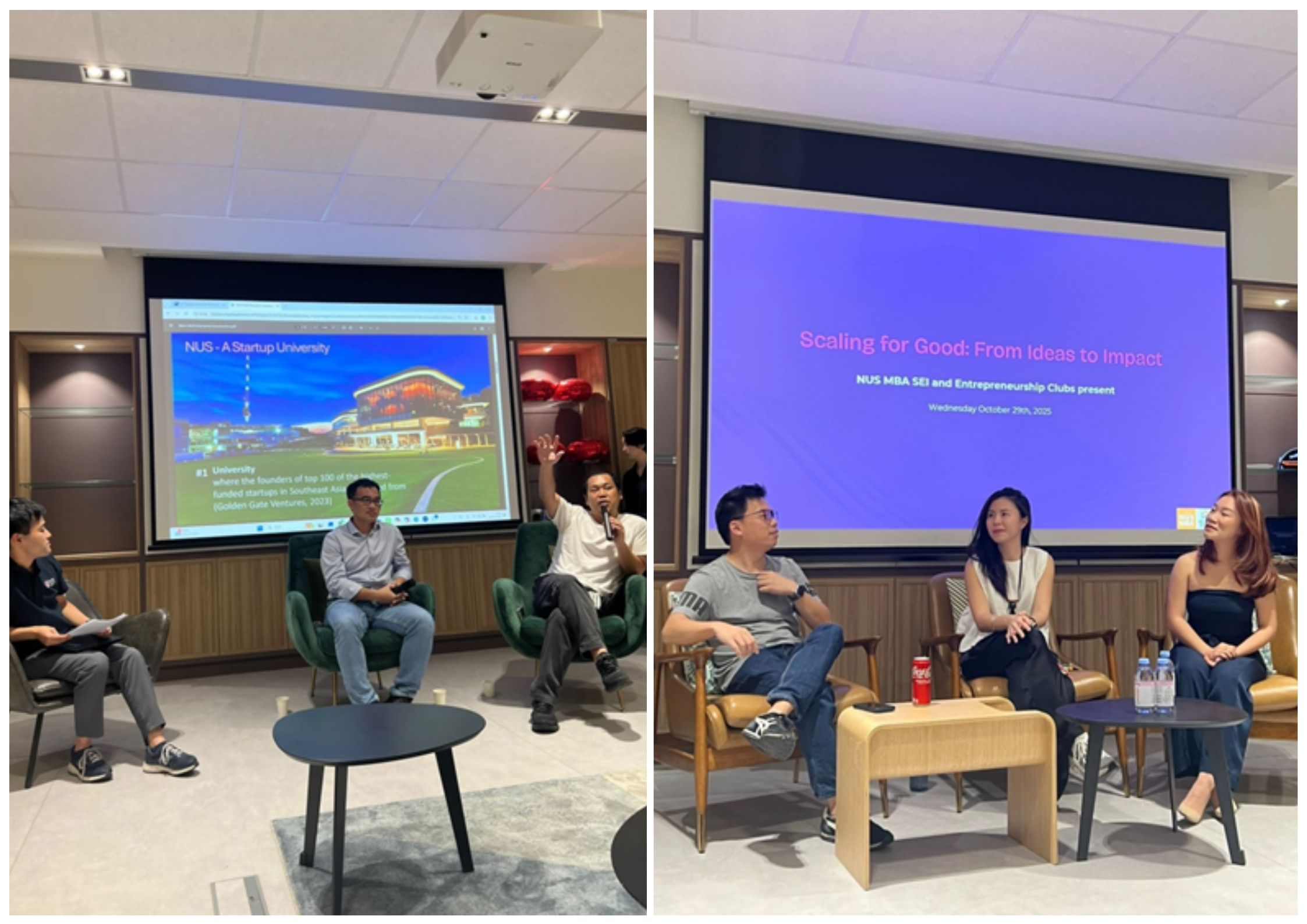
The Women in Tech Panel was a different kind of inspiration. Hearing leaders from companies like Amazon and Microsoft discuss allyship, representation, and leadership made the conversation feel grounding and real. Meeting Julie Bulaklak, a Filipina thriving at Microsoft as a startup lead, was deeply motivating — a reminder that people with backgrounds like mine can thrive and lead at the highest levels.
But the moments that stayed with me the most were the intimate ones.
A coffee chat with Ayo Canlas (UCLA-NUS EMBA, now CFO & VP of Strategy at SharkNinja) offered grounding advice on career pivots, ambition, and navigating identity as a Filipino leader abroad. Later, lunch with Prof. Joel Goh took me outside classroom formulas and into conversations about life, careers, and what “good work” might look like.
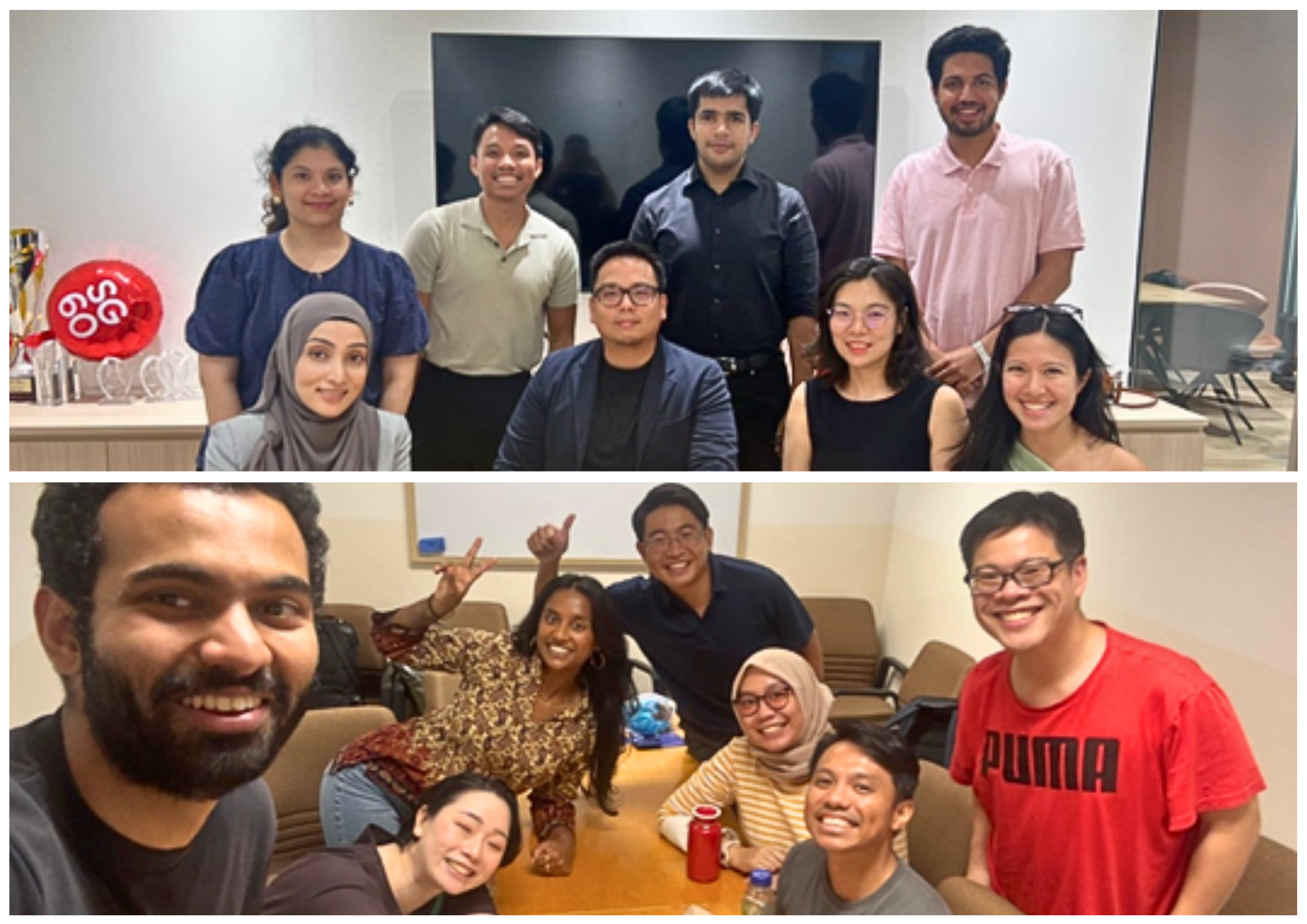
These encounters made October the month my network started to feel less like a group of acquaintances — and more like a community I’m belonging to.
Personal Momentum: The Discipline of Movement
On the personal front, October pushed me into a deeper state of self-awareness and discipline.
The defining milestone was completing the Chicago Marathon and earning my first World Marathon Major star. Training through classes, club responsibilities, and career prep tested my limits, but running remains one of the ways I understand myself most clearly. The race was tough, but crossing that finish line felt symbolic — a reminder that I can honour my commitments to myself, even amid the busiest season of my life.
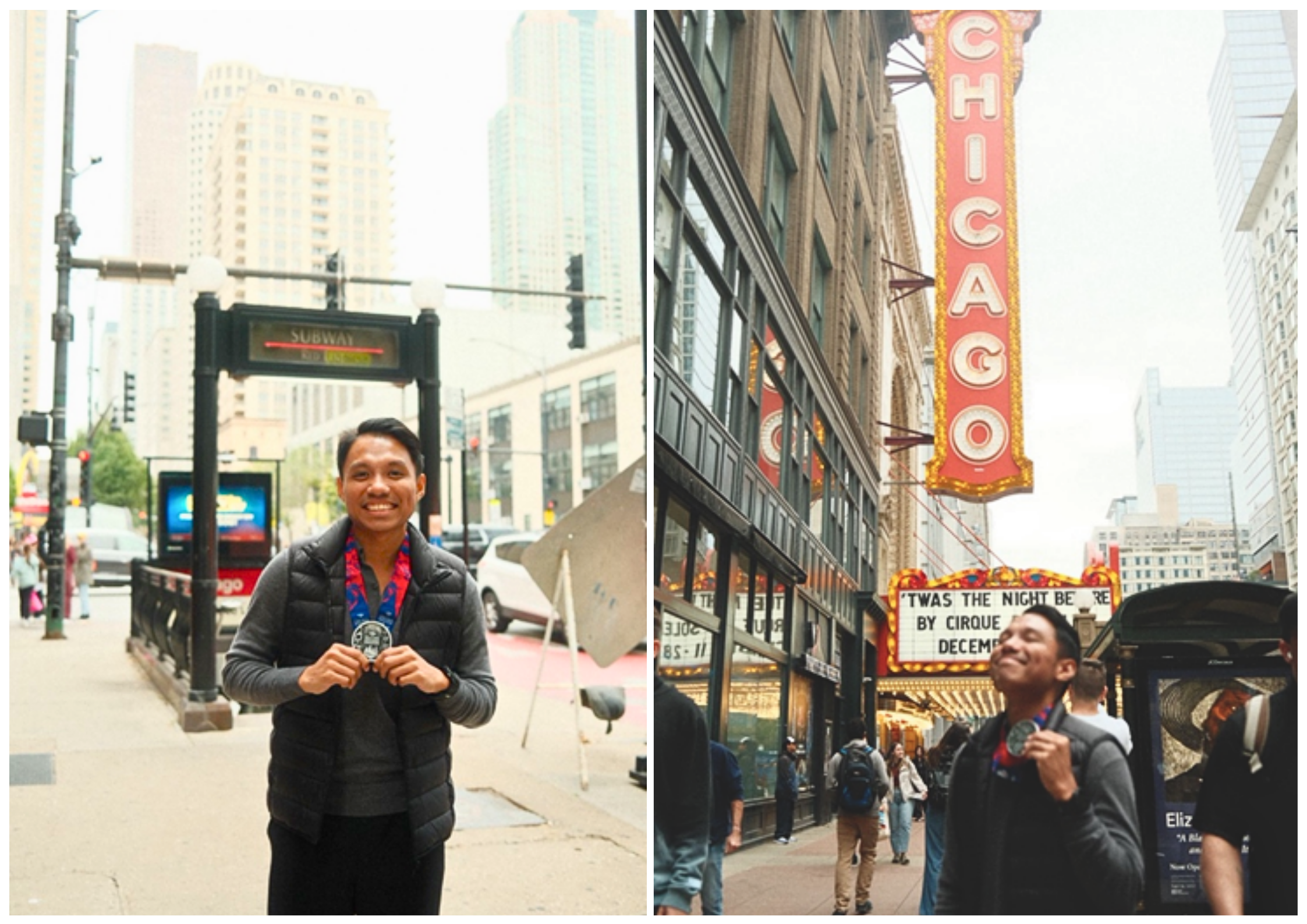
Beyond the marathon, this month taught me to protect time for movement, to recalibrate my routines, and to sustain joy in small ways — including showing up at the NUS MBA Diwali and Halloween Party, a reminder that playfulness and celebrations are part of what make the intensity of the MBA survivable.
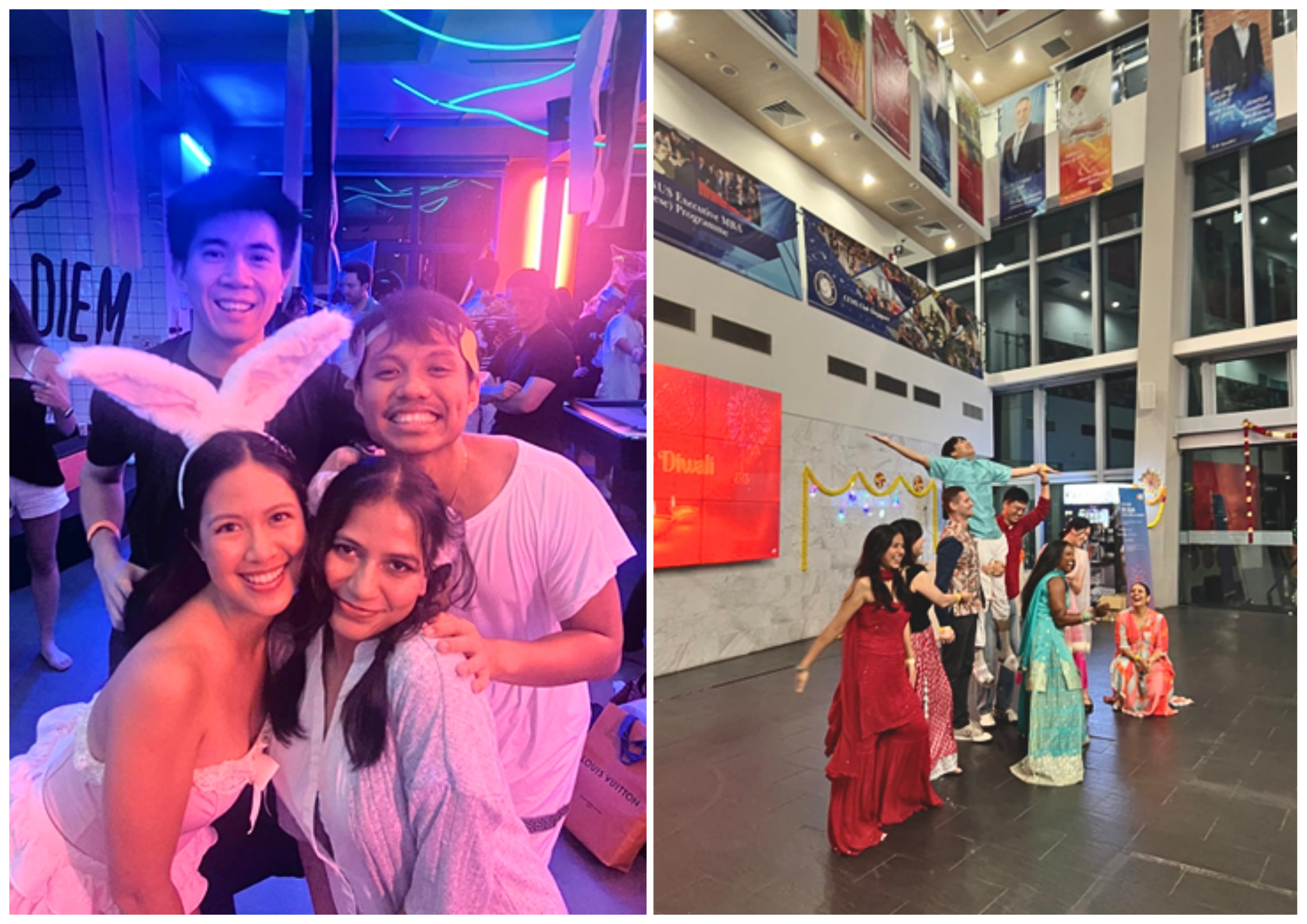
October helped me rediscover the version of myself that thrives when discipline, community, and ambition align.
Where This Momentum Is Taking Me
October wasn’t loud, but it was loud in its significance.
In my career, I moved from exploring to thriving.
In my relationships, I moved from meeting people to belonging.
In my personal life, I moved from surviving the semester to reclaiming my identity and discipline.
I’m no longer in wander-and-explore mode.
I’m in motion-building mode — and this month was the inflection point that made it possible.
Momentum didn’t arrive all at once.
It built quietly, steadily, and then unmistakably.
And now, I’m finally finding my pace.

Myth vs Reality: What My First Two Months at the NUS MBA Taught Me About Careers
I arrived a storyteller from tech and communications; I found a campus that let me explore like a builder. From a VC fireside to banking pathways, consulting drills, and company roadshows, the NUS MBA let me try real paths, not just imagine them.
Two months ago I started writing the chapter of my NUS MBA; since then, the program has been filling the pages faster than I can turn them. My career development journey keeps bringing me back to a lesson from our Managerial Operations class: if you want a break through, apply design thinking. You have to start wide, experiment freely, and resist the urge to shoot down ideas—then narrow the focus, optimize what works, and double down on what matters.
This lesson on design thinking was something that I applied on my first two months of the MBA. After doing marketing and communications for the last 8 years, I started venturing out of my comfort zone and into the great wild west of career opportunities. Thankfully – the NUS MBA has been a compass that allowed me to explore new frontiers like Venture Capital, Finance, Consulting and into the familiar with Consumer Packaged Goods and Tech.
Myth 1 (VC): Startups are just unicorns and vibes.
Reality: Investability is a discipline.
A fireside chat with Joe Zhang—who shared his pivot from the NUS MBA into venture capital and the milestones on his path to partnership—reframed Southeast Asia’s startup scene beyond headline unicorns. I followed the curiosity into Startup Wars, a TNB Aura–sponsored VC case competition. My team didn’t advance, but the reps were gold: dissecting unit economics, stress-testing models, and building a simple rubric for “investability” that filters pitch-deck poetry from compounding logic. Exploration works best when it’s structured.
Myth 2 (Finance): Finance is only for spreadsheet people.
Reality: It’s also relationships, judgment, and timing.
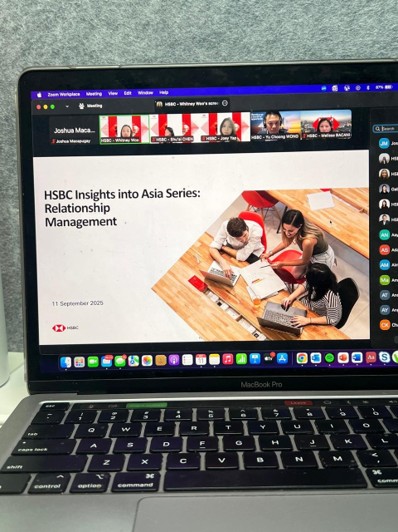
I signed up for the HSBC Career Pathways virtual talk and networking session after spotting it on the NUS TalentConnect portal—purely as a first-hand test. I’ve never envisioned myself in finance; I’ve built a career in storytelling, not “calculator work.” The session demystified the space. Through conversations with both new and experienced bankers, I got a look behind the scenes of Private Wealth—how trust and sequencing matter when advising clients—and a clearer view of how investment bankers function within the bank in Singapore. Beneath the models sit relationships, timing, and judgment. The fundamentals gap I need to close feels very bridgeable.
Myth 3 (Consulting): Consulting is all puzzles and trick questions.
Reality: It’s structured problem-solving—fast.
My curiosity about consulting started back at Grab, where many of my mentors—heads of operations, marketplace, strategy, and even our country manager—were ex-consultants from McKinsey and Accenture. At NUS, BizCareers ran two talks that put scaffolding around that interest: one with seasoned folks from BCG, McKinsey, and Mastercard about career paths, and another on how to approach casing. I’d done case studies when pivoting into tech after my agency stint, but formal casing was new. Learning to structure thoughts, break down problems, form hypotheses, and develop detailed answers felt like sharpening tools I already had—now it’s about reps and precision.
Myth 4 (Tech): Non-engineers can’t lead in tech.
Reality: Product sense + customer insight + shipped outcomes win.
A “career acceleration in tech” session with Vincent Xu (TalentGeist) mapped his pivot from private equity into strategy and product marketing at Google. That story quieted a fear I didn’t realize I was carrying: that leadership in tech requires code. What it actually requires is clarity—of problem, priorities, and outcomes—paired with the discipline to ship. As someone from a non-engineering background who’s been tech-adjacent at Grab, Vincent’s pivot widened my map instead of shrinking it.
Myth 5 (CPG): Brand marketing is just ads.
Reality: It’s a mini-GM role with P&L levers.
At the NUS × P&G roadshow, the team showcased opportunities across HR, Finance, and Brand Marketing. Having worked with P&G early in my agency-side years, it felt like peeking inside the house I used to get briefs from. Brand management appeals because it’s a “mini-GM” role—distribution, advertising, budgets, pricing—like running a small business. P&G’s legacy as the birthplace of modern brand management in the 1930s is disciplined creativity at scale. (The free shampoo and soaps didn’t hurt either.)

Myth 6 (Product): If you’re good at launching, you don’t need to build.
Reality: Building reshapes how you launch.
The INSEAD × Grab Product Games briefing for 2025 (which NUS won last year) flipped my old muscle memory. At Grab, in product marketing and communications, products usually landed on my lap—my job was to launch, grow, and scale them to millions of users in the Philippines. This time we had to think like PMs: find a new market opportunity and design a net-new vertical. Moving from amplification to creation fused both halves of my career—the storyteller who rallies momentum and the builder who makes something worth rallying around.
From Exploration to Evidence
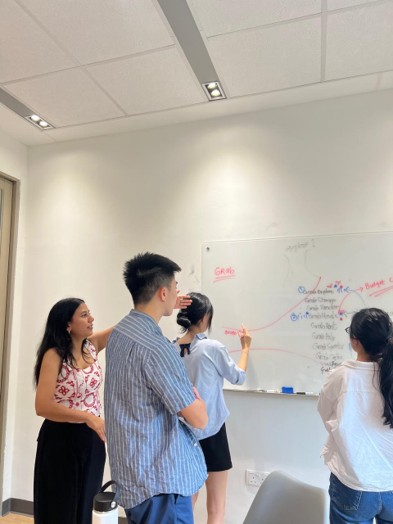
Exploration only started to matter once it showed up in how I work. I began with the basics: I dusted off my CV from my b-school applications and ran it through VMock – an AI tool made available to us by the Bizcareers office. Three passes later, it finally matched the story I’m telling now. A coaching session with BizCareers—thank you, Linda—turned that momentum into a simple loop I can actually run: explore, learn, focus. Having a cadence changed everything.
With that rhythm in place, the map widened. I opened my search to Singapore, Hong Kong, Japan, and across ASEAN, saying yes to conversations and assessments as they came—from finance to tech, consulting to CPG. Each touchpoint forced clarity: what energized me, what I needed to learn next, and which direction deserved another step.
I kept the engine humming with a steady casing routine on CaseCoach and peer mocks, targeted applications through BizCareers, TalentConnect, and LinkedIn, and quick follow-ups that turn chats into next steps. One by one, these pieces are becoming more than activity—they’re evidence that the path I’m choosing is the one I can deliver on.
Looking Ahead
I came to NUS ready to test—and found a place that lets you do it with intention. Two months in, the design-thinking loop still holds: start wide, learn fast, narrow with care, and double down where skill, purpose, and joy overlap. What surprises me most is not how many doors opened, but how clearly the right ones now stand out.
The next chapter won’t be a straight line; it will be a series of deliberate bets—on people, on problems worth solving, and on work that compounds. If there’s one lesson I’m taking forward, it’s this: exploration isn’t the opposite of commitment. It’s how you earn it.